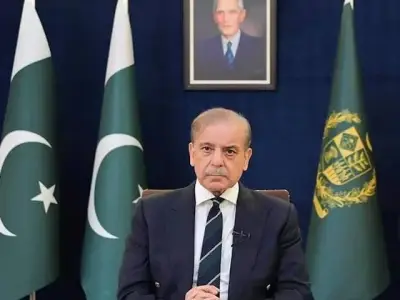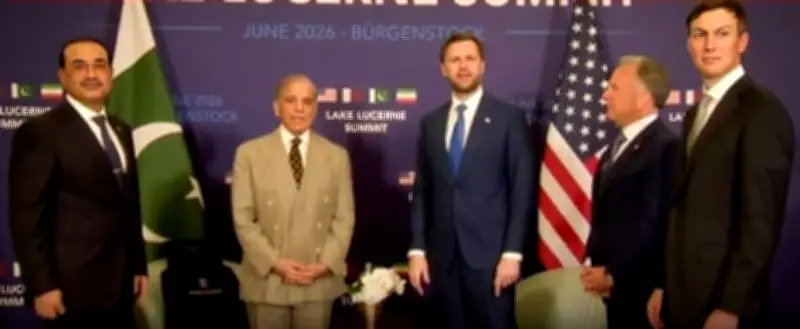
Prime Minister Shehbaz Sharif and Chief of Army Staff Field Marshal Asim Munir held an important meeting with US Vice President JD Vance in Zurich on Sunday amid ongoing diplomatic efforts related to US-Iran negotiations. The meeting was also attended by US special envoy Steve Witkoff and former US presidential adviser Jared Kushner.
Technical-level talks begin in Bürgenstock
Technical-level talks between the United States and Iran under the Islamabad Memorandum of Understanding (MoU) are scheduled to begin today in Bürgenstock, Switzerland. Officials from the United States, Iran, Pakistan and Qatar will participate in the discussions aimed at moving forward with the commitments outlined in the agreement reached between Washington and Tehran.
The talks will be the first formal engagement since the signing of the Islamabad MoU on June 17, 2026. Pakistan is expected to continue playing a supportive role in facilitating and advancing the implementation of the understandings reached between the Islamic Republic of Iran and the United States.

Details of the US-Iran deal
The 14-point agreement was signed by US President Donald Trump and Iranian President Masoud Pezeshkian, while Prime Minister Shehbaz Sharif signed the document in his role as mediator. Under the agreement, Tehran and Washington have agreed on a framework to end the conflict, reopen the Strait of Hormuz, and continue negotiations under a 60-day roadmap.
The agreement, which brought an end to more than 100 days of conflict, has received widespread support and appreciation from the international community. According to the deal, once a final understanding is reached regarding Iran’s nuclear programme, the United States will also facilitate the release of a $300 billion reconstruction fund backed by regional countries.
Pakistan's mediating role
The meeting in Zurich underscores Pakistan's continued involvement in facilitating dialogue between the US and Iran. The Islamabad MoU, signed in June 2026, marked a significant breakthrough after over three months of hostilities. The 14-point framework includes provisions for de-escalation, maritime security in the Strait of Hormuz, and a structured negotiation timeline.
International observers have praised the agreement as a crucial step toward regional stability. The $300 billion reconstruction fund, once released, is expected to support infrastructure and economic recovery in conflict-affected areas.