In a significant diplomatic statement, Qatar's Prime Minister has called for a fundamental shift in how the international community approaches conflict resolution. The Gulf state's top official argued that to achieve lasting peace, the world must be willing to engage in dialogue with non-state actors, a group often sidelined in traditional diplomacy.
A Pragmatic Approach to Complex Conflicts
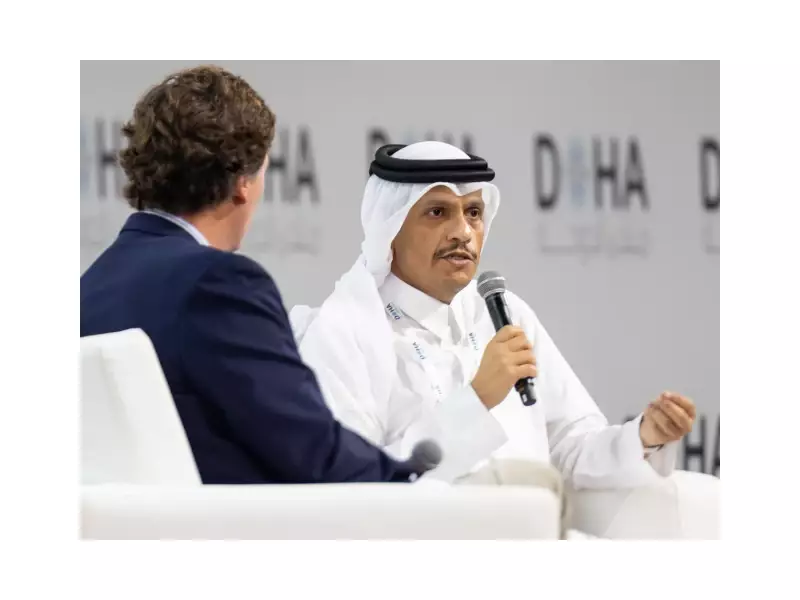
Sheikh Mohammed bin Abdulrahman Al-Thani, who also serves as Qatar's Foreign Minister, made these remarks during a panel discussion at the prestigious Munich Security Conference. He emphasized that excluding key parties from negotiations only prolongs violence and suffering. The Prime Minister pointed to the situation in Afghanistan as a prime example where dialogue with the Taliban, a non-state actor at the time, was essential for progress.
"If we are going to ever have any settlement, we need to include everyone in the dialogue," Sheikh Mohammed stated. He stressed that while engaging with groups designated as terrorists or militants is politically challenging, it is a necessary step for pragmatic peacebuilding. The alternative, he warned, is continued deadlock and the perpetuation of humanitarian crises in conflict zones around the globe.

The Gaza Crisis and the Path Forward
A central part of the Prime Minister's address focused on the ongoing war in Gaza. Qatar has played a crucial mediating role between Israel and Hamas, facilitating talks on hostage releases and humanitarian pauses. Sheikh Mohammed revealed that negotiations for a ceasefire and hostage deal are currently at a "critical stage," but significant gaps remain between the involved parties.
He expressed deep concern over the catastrophic humanitarian situation in the Palestinian enclave, where thousands have been killed and a majority of the population is displaced. The Qatari leader warned that the continued military operation in Rafah, where over a million civilians are sheltering, could lead to a "humanitarian disaster" and completely derail the fragile mediation efforts.
"We are hoping to see some momentum soon, but the situation on the ground is making things more complicated," he noted, highlighting the direct link between escalating violence and stalled diplomacy.
Broader Implications for International Relations
This advocacy from Qatar marks a bold stance in global diplomacy. The call to legitimize talks with non-state actors challenges the conventional state-centric model of international relations. Qatar's own foreign policy, which maintains channels with a wide range of actors including Hamas and the Taliban, exemplifies this approach.
The Prime Minister's arguments suggest a growing recognition that many of the world's most intractable conflicts involve non-state entities that hold significant power and influence on the ground. Ignoring them, according to Doha's view, is no longer a viable option if the goal is sustainable peace and security.
This perspective is likely to spark debate among Western allies who have traditionally been hesitant to engage with groups they classify as terrorist organizations. However, Qatar's successful mediation in several crises lends weight to its pragmatic argument for inclusive dialogue as the only realistic path to ending wars.