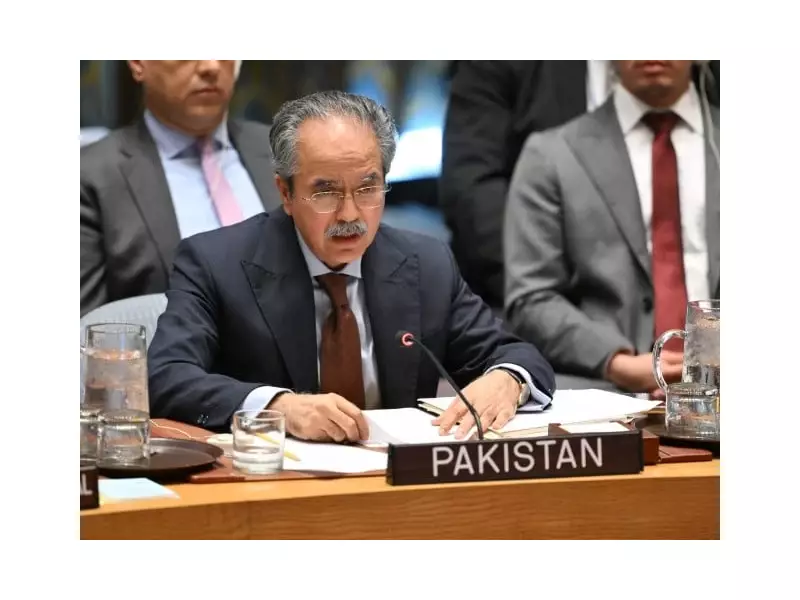
Pakistan has launched a vigorous campaign for comprehensive reform of the United Nations Security Council, identifying the veto power wielded by permanent members as a significant barrier to effective global governance and conflict resolution.
The Case for United Nations Reform
During a recent address at the UN General Assembly, Pakistan's representative emphasized that the current structure of the Security Council no longer reflects contemporary geopolitical realities. The 15-member council, with five permanent members holding veto power, frequently faces deadlock on critical international issues, preventing timely action on emerging conflicts and humanitarian crises.
Pakistan's diplomatic mission highlighted how the use of veto power has repeatedly obstructed resolutions aimed at addressing pressing global conflicts. This privileged status granted to a handful of nations undermines the principle of sovereign equality among UN member states and diminishes the council's credibility in maintaining international peace and security.

Pakistan's Stance on Equitable Representation
Islamabad advocates for a more democratic, accountable, and transparent Security Council that better represents the global community of the 21st century. Pakistan supports expansion in both permanent and non-permanent categories of membership, with particular emphasis on adequate representation for developing countries, small states, and Muslim-majority nations.
The country's position stresses that any new permanent members should not enjoy the veto power, which Pakistan views as an anachronistic privilege inconsistent with contemporary democratic norms. Instead, Pakistan proposes collective decision-making mechanisms that would prevent any single country from blocking international consensus on crucial matters.
Pakistan's longstanding position on UN reform is rooted in its commitment to multilateralism and its belief that a more representative Security Council would be better equipped to address complex global challenges, including regional conflicts, terrorism, and humanitarian emergencies.
The Road Ahead for UN Restructuring
The push for Security Council reform has gained momentum in recent years as global power dynamics continue to evolve. Pakistan remains actively engaged in the Inter-Governmental Negotiations on Security Council reform, working alongside other like-minded nations to build consensus around a reform model that enjoys the widest possible political acceptance.
Pakistan's diplomatic efforts focus on creating a Security Council that is more representative, democratic, transparent, and effective in fulfilling its primary responsibility for maintaining international peace and security. The country continues to advocate for a solution that addresses the interests and concerns of all UN member states, particularly those from the developing world.
As the debate on UN reform continues, Pakistan remains committed to pursuing comprehensive changes that would make the world body more responsive to current global challenges and better equipped to serve the interests of all humanity rather than a select few powerful nations.