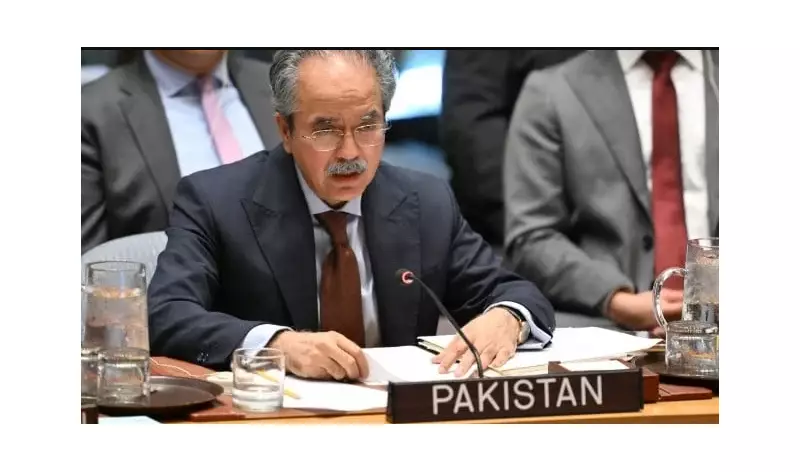
Pakistan Raises Alarm at UN Over Afghan Weapons Proliferation
Pakistan has issued a stern warning to the United Nations about the serious threat posed by uncontrolled movement of illegal weapons within Afghanistan. During the UN Security Council's Open Debate on Small Arms, Pakistan's Permanent Representative Ambassador Asim Iftikhar Ahmad expressed deep concerns about how these modern weapons are being utilized by anti-Pakistan militant groups.
Pakistan remains deeply concerned about the proliferation of sophisticated weaponry in Afghanistan and its spillover effects on neighboring countries, Ambassador Ahmad stated clearly during his address.
Direct Threat to Neighboring Nations
The Pakistani envoy highlighted that according to the Secretary-General's reports, significant stockpiles of sophisticated arms and ammunition exist in Afghanistan that pose a direct threat to countries sharing borders. Many of these weapons were left behind by foreign forces or sold through Afghanistan's black markets, now finding their way into the hands of terrorist organizations.

These weapons have been used against Pakistani civilians and law enforcement agencies, leading to the loss of thousands of innocent lives, Ambassador Ahmad revealed with grave concern.
The ambassador specifically named terrorist groups benefiting from these weapons, including Daesh-K, Tehreek-e-Taliban Pakistan (TTP), Fitna al-Khawarij, the Balochistan Liberation Army (BLA), and the Majeed Brigade. He emphasized that these organizations continue to operate from Afghan soil with external financing and support from what he described as a principal destabilizing actor in the region.
Border Security Challenges and Global Implications
Ambassador Ahmad provided concrete evidence of the security threat, explaining that weapons confiscated at the Pakistan-Afghanistan border have been traced back to stockpiles left behind by foreign forces in Afghanistan or sold through illegal markets. Pakistan has credible information about attempts to smuggle these arms across borders for terrorist activities.
The movement of unmarked or unregistered weapons sustains non-state armed groups, terrorist networks, and criminal gangs, undermining regional stability, he warned.
The ambassador also drew attention to the broader global impact, pointing to Africa as another region severely affected by illegal arms trade. He noted that proliferation of small arms has fueled conflicts, amplified internal threats, and eroded the rule of law across the continent.
Emerging Technological Challenges
Ambassador Ahmad addressed the complicating factors of modern technology in arms control. New developments in warfare including AI-based weapons, 3D-printed arms, unmanned aerial vehicles, and high-tech night-vision equipment have created fresh challenges for global regulation efforts.
Criminal groups and terrorists increasingly use cryptocurrency and the dark web to fund and procure such weapons anonymously, he informed the Security Council.
However, the ambassador also noted that these new technologies offer opportunities for enhanced monitoring, control, and international cooperation. He stressed that traditional arms control mechanisms, designed for another era, must evolve to address these emerging realities.
Pakistan's Commitment to Global Action
Reaffirming Pakistan's commitment to the UN Programme of Action on the Illicit Trade in Small Arms and Light Weapons, Ambassador Ahmad described it as a balanced framework that addresses both supply and demand while recognizing states' legitimate security needs.
We firmly believe the issue must be tackled comprehensively and collectively, he concluded. Pakistan remains committed to implementing this framework nationally and urges its full execution globally to safeguard international and regional peace and security.
The warning comes amid increasing security concerns in the region, with Pakistan continuing to face terrorist attacks originating from Afghan territory. The detailed presentation at the UN Security Council underscores Pakistan's determination to address this critical security challenge through international cooperation and collective action.