Pakistan has issued a strong appeal at the United Nations for a comprehensive political resolution to the long-running conflict in Yemen. The country's envoy highlighted the immense suffering of millions due to collapsed basic services and demanded the immediate release of detained United Nations and relief personnel.
Pakistan's Firm Stance at the Security Council
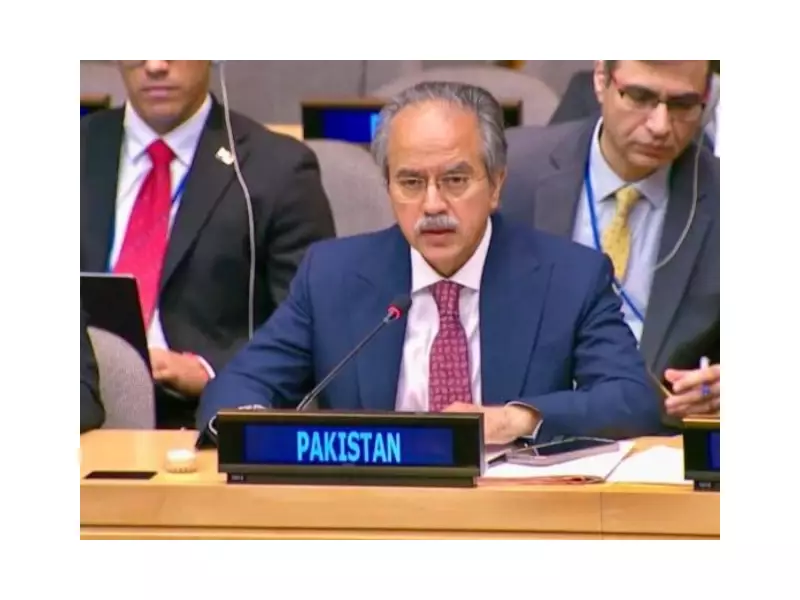
Addressing the UN Security Council on Wednesday, Pakistan's Permanent Representative, Ambassador Asim Ahmad, voiced deep concern over the recent surge in violence. He called on all Yemeni stakeholders and regional partners to work constructively towards an inclusive and durable political settlement. Ambassador Ahmad emphasized that any solution must reflect the aspirations of all Yemeni people and ensure regional peace and stability.
The Pakistani envoy welcomed an initiative by the internationally recognized, Aden-based Presidential Leadership Council. The council has proposed comprehensive talks in Riyadh, facilitated by Saudi Arabia. Pakistan urged all parties to engage in these negotiations to find a political solution based on agreed parameters.

Pakistan reaffirmed its unwavering commitment to Yemen's unity, sovereignty, independence, and territorial integrity. Ambassador Ahmad strongly opposed any unilateral actions by Yemeni factions that could deepen divisions, increase tensions, and sabotage peace efforts.
UN Envoy Warns of Fragile Stability and Economic Collapse
UN Special Envoy Hans Grundberg, briefing the 15-member Council, cautioned that the period of relative calm since 2022 was never a permanent solution. He warned that recent events in southern Yemen demonstrate how quickly stability can unravel.
Grundberg stressed that the future of southern Yemen cannot be decided by any single group or through the use of force. He underscored the critical need for inclusive dialogue, economic stabilization, and a UN-facilitated political process across the entire nation.
While some military de-escalation has occurred recently, the security situation remains fragile. This is especially true after rival forces made new deployments in southern governorates. In December, forces linked to the separatist Southern Transitional Council tried to expand their presence in Hadramout and Al Mahra. In response, government-aligned forces, backed by Saudi Arabia, moved in early January to retake control of key infrastructure.
The UN envoy welcomed a proposal by President Rashad al-Alimi to hold talks with a broad spectrum of southern leaders. He saw this as a potential step toward reviving a nationwide political process under UN guidance.
Grundberg added that political uncertainty is severely impacting Yemen's economy. Soaring prices, unpaid salaries, and failing services are eroding the resilience of ordinary households.
Pakistan Condemns Detentions, Demands Humanitarian Access
In his remarks, Ambassador Asim Ahmad reiterated Pakistan's support for a Yemeni-owned and Yemeni-led political process. This process must be grounded in full respect for Yemen's institutions and the internationally recognized political framework. Pakistan supports the active role of the UN and its Special Envoy.
Ambassador Ahmad strongly condemned the continued arbitrary detention of UN staff, humanitarian workers, and diplomatic personnel. He also denounced the unlawful seizure of UN premises and assets in areas under Houthi control, calling these acts a blatant disregard for international law.
The Pakistani envoy demanded swift, sustained, and unhindered access for humanitarian aid. He also called for predictable and adequate funding to address the dire needs of the suffering Yemeni population.