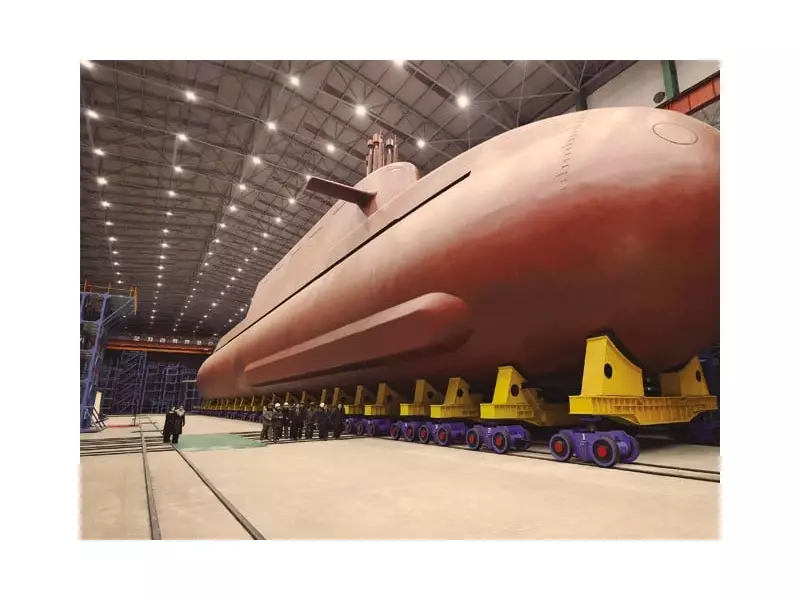
In a significant display of military ambition and deepening international alliances, North Korean leader Kim Jong Un has conducted a high-profile inspection of the country's nuclear submarine development project. This move comes alongside strong rhetorical support from Russian President Vladimir Putin, who has hailed the burgeoning partnership between Moscow and Pyongyang as an "invincible relationship."
Kim's Strategic Submarine Tour
The state-run Korean Central News Agency (KCNA) reported that Kim Jong Un visited a major naval shipyard on an unspecified recent date. During the visit, he reviewed the construction progress of a nuclear-powered submarine and examined new strategic weapon systems, including unmanned underwater vehicles and nuclear-capable underwater drones described as "Haeil."
Kim emphasized the critical importance of the naval nuclear armament project for his country's defense strategy. He declared that the possession of a nuclear attack submarine was not merely a future goal but an urgent necessity to counter perceived threats from the United States and its allies. The North Korean leader stated that the nation's nuclear and missile programs would continue to advance without interruption.

Putin's Declaration of an 'Invincible' Bond
Parallel to Kim's domestic military showcase, Russian President Vladimir Putin publicly reinforced the strength of the Moscow-Pyongyang axis. In a message to Kim, Putin praised the "invincible power of friendship and cooperation" between Russia and North Korea. He expressed confidence that the two nations would continue to strengthen their comprehensive and constructive bilateral relations.
This exchange follows a landmark summit between the two leaders in September 2023, which resulted in a mutual defense pact. The agreement has raised serious alarms in Washington, Seoul, and Tokyo, as it potentially commits each nation to provide military assistance if the other is attacked.
Regional Reactions and Global Implications
The timing of these developments is particularly sensitive. The United States, South Korea, and Japan have condemned the arms transfers between North Korea and Russia, which are believed to involve North Korean artillery shells and missiles being sent to support Russia's war in Ukraine, in exchange for Russian technological and economic aid.
Analysts suggest Kim's visit to the submarine project serves multiple purposes:
- Demonstrating Military Progress: To showcase domestic technological achievements and reinforce regime strength.
- Strengthening Bargaining Position: To signal to Russia the value of North Korea as a military partner.
- Sending a Defiant Message: To show the US and its allies that sanctions and pressure will not halt its weapons programs.
The evolving alliance poses a major challenge to non-proliferation efforts and regional stability. A nuclear-powered submarine capability would significantly enhance North Korea's second-strike potential, allowing it to deploy nuclear weapons far from its shores with greater stealth.
South Korea's military has stated it is closely monitoring the situation but expressed skepticism about North Korea's immediate ability to deploy a fully operational tactical nuclear submarine. However, they acknowledge the continuous advancement of Pyongyang's military programs.
As the diplomatic and military maneuvering continues, the "invincible" bond between Moscow and Pyongyang is set to become a central focal point of global security discussions, with profound consequences for the Korean Peninsula and the ongoing conflict in Ukraine.