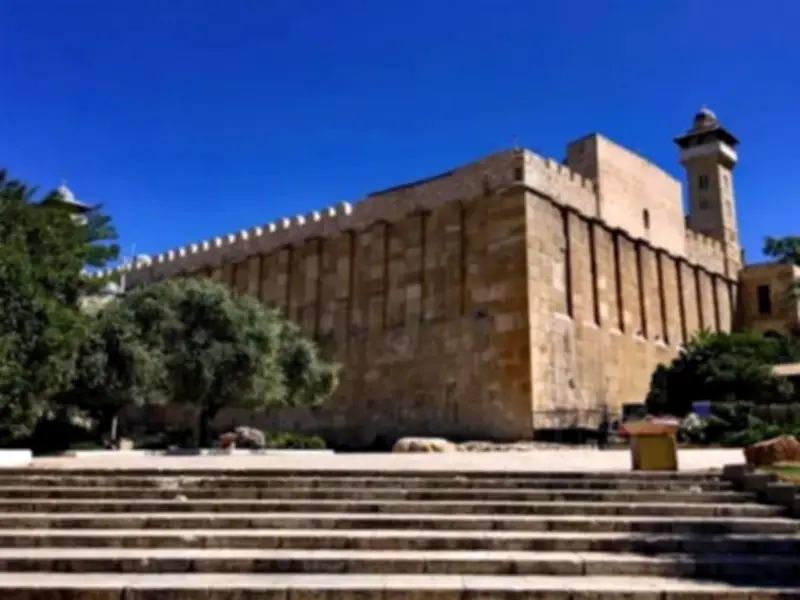
JERUSALEM: Israel has seized planning and construction powers at a Jewish and Muslim shrine in the occupied West Bank from Palestinian authorities, scrapping parts of an agreement in place since the 1990s, Finance Minister Bezalel Smotrich said on Tuesday.
Background of the Hebron Agreement
Under the 1997 Hebron Agreement, Palestinians controlled planning and construction in the entire city, including the Jewish Tomb of the Patriarchs and the adjoining Muslim Ibrahimi Mosque. Hebron's Old City is recognised as a Palestinian World Heritage site. Hundreds of Jewish settlers live among tens of thousands of Palestinians in parts of the ancient city that are under Israeli security control.
Smotrich's Announcement
Smotrich, a far-right minister, said he had given the final sign-off late on Monday to the transfer of planning and construction powers as they affected the religious site and nearby Jewish settlers to Israeli authorities. In a speech marking the establishment of a new Israeli settlement near Hebron, Smotrich said the "historic step" would deepen "Israeli sovereignty" in the West Bank, which Palestinians seek as the heart of a future independent state.

Palestinian Reaction
Palestinian President Mahmoud Abbas's office called the seizure of powers an "infringement upon the political and legal status of Hebron", and a violation of international law. Jews believe the Cave of the Patriarchs is where Abraham, Isaac, Jacob and their wives are buried. Muslims who, like Christians, also revere Abraham, built the Ibrahimi mosque, also known as the Sanctuary of Abraham, in the 14th century.
Broader Context of Settlement Expansion
The Hebron moves come after Prime Minister Benjamin Netanyahu's security cabinet approved steps earlier this year to make it easier for settlers to buy land in the West Bank and give Israeli authorities more enforcement powers in the territory. Smotrich, who has said he wants to bury the idea of Palestinian statehood in the West Bank, has backed a rapid expansion of Israeli settlements in the territory, which has been accompanied by a rise in settler attacks on Palestinians.
International View
UN bodies and most countries have found Israel's settlements in the West Bank to be illegal and consider their expansion to be a primary obstacle to Israeli-Palestinian peace and Palestinian statehood. Israel rejects this, viewing the territory as disputed and saying a Jewish presence has existed there for thousands of years.
Israeli Foreign Ministry Clarification
In an apparent bid to stave off international criticism of Smotrich's announcement on Hebron, Israel's foreign ministry said the 1997 Hebron Agreement had not been cancelled in its entirety. It said the security cabinet had decided several months ago to take control of planning and construction with relation to Jewish settler areas and Jewish holy sites, referencing the city's shrine holy to Muslims, Jews and Christians. It accused the Palestinian municipality for Hebron of failing to cooperate over such matters.
Local Palestinian Response
The Palestinian mayor of Hebron, Yousef Al-Jabari, called Smotrich's announcement a "racist decision aimed at stripping the Hebron municipality of its powers". Israel is due to call an election by the end of October, ahead of which Smotrich is struggling in the polls. A settler himself, he has long pushed for the annexation of the West Bank and his party draws much of its support from ideologically motivated settlers who view the West Bank as their biblical heartland.
Violence in Hebron
Hebron has at times been a flashpoint for Israeli-Palestinian violence. In 1994, a Jewish settler killed 29 Muslims praying at the shrine. Settlers have killed 13 Palestinians this year, according to UN data.