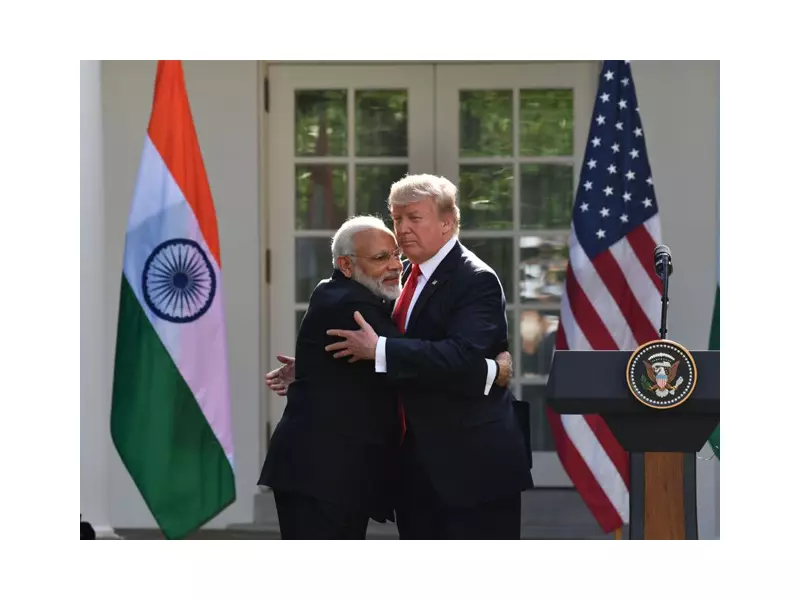
In a significant diplomatic development, former United States President Donald Trump has extended an invitation to India to join a proposed international body aimed at resolving the Gaza conflict. This initiative, tentatively named the 'Gaza Board of Peace,' marks Trump's latest attempt to position himself as a key mediator in the protracted Israel-Palestine issue.
Trump's Vision for a Mediation Board
The concept was revealed by Trump during a recent interaction, where he outlined his plan to assemble a group of nations to oversee peace efforts in Gaza. According to reports, the former president believes that a collaborative international board, rather than unilateral US efforts, could be more effective in brokering a lasting solution. The invitation to India underscores the country's growing geopolitical stature and its perceived balanced stance on the conflict.
Trump's proposal suggests a board comprising nations with significant diplomatic and economic influence. While specific details on the board's mandate and membership are still emerging, the inclusion of India points to a strategy of engaging major global powers from outside the traditional Western and Middle Eastern circles. This move is interpreted by analysts as an effort to lend broader legitimacy and diverse perspectives to the peace process.

India's Stance and Regional Implications
India has historically maintained a nuanced position on the Israel-Palestine conflict. It was one of the first non-Arab states to recognize the Palestine Liberation Organization (PLO) as the sole representative of the Palestinian people and later granted full diplomatic recognition to the State of Palestine in 1988. Simultaneously, India has developed strong strategic and defense ties with Israel over the past decades.
The invitation places New Delhi in a delicate position. Accepting a role on a board championed by Donald Trump, a deeply polarizing figure in US politics, could have complex diplomatic repercussions. It would involve India more directly in a highly charged mediation process, testing its ability to balance its relationships with Arab nations, Israel, Iran, and its traditional stance of supporting the Palestinian cause. The Indian government has not yet issued an official response to the invitation.
Political Context and Future Prospects
This initiative comes amidst Trump's campaign for a return to the White House in the upcoming US presidential election. By floating such foreign policy ideas, he is likely signaling his continued interest in international affairs and his self-styled role as a dealmaker. The 'Gaza Board of Peace' concept echoes his administration's earlier efforts, such as the 'Deal of the Century' peace plan, which was largely rejected by Palestinian leadership.
The success of such a board would hinge on participation from key stakeholders, including Palestinian representatives and other Arab states, whose buy-in remains uncertain. Furthermore, the current Biden administration's approach to the conflict differs significantly, focusing more on traditional diplomatic channels and humanitarian aid.
For Pakistan and the wider region, an Indian seat at this hypothetical table would be closely watched. It could alter the dynamics of diplomatic engagement on an issue that resonates deeply across South Asia and the Muslim world. The development highlights how the Gaza conflict continues to draw in global powers, creating new, unexpected alignments and forums for potential negotiation.
As the situation evolves, the world will be observing whether this proposal gains traction or remains a campaign trail suggestion. The involvement of a major South Asian power like India, if it materializes, could introduce a new variable into one of the world's most intractable disputes.