Residents Struggle Amid Destruction and Displacement
Milia el-Cheikh, a Christian from the Shiite-majority village of Dibbine in southern Lebanon, can no longer reach her home. From a friend's balcony in Jdeidat Marjayoun, she scans the ruins of her deserted village, its entrances blocked by barbed wire. Dibbine is one of several Shiite communities destroyed by Israeli forces battling Hezbollah. El-Cheikh now shelters elsewhere but visits Jdeidat Marjayoun, a mostly Christian village, for coffee with a friend. "I don't know anything about my house," she said. "Nothing is more agonizing than not being able to get to your home."
Jdeidat Marjayoun sits on the blurry edge of the Israeli-occupied zone, where the military has pushed out mostly Shiite populations, believing they harbor Hezbollah. Many towns have been demolished. Neighboring Christian, Sunni, and Druze communities have been allowed to stay, but their lives are transformed: homes struck, roads closed, and nighttime raids terrifying residents. Israeli warnings against hosting Hezbollah fighters have effectively barred them from taking in displaced Shiites, driving a wedge between longtime neighbors and stoking political and sectarian tensions.
Conflict Background and Ceasefire
The latest conflict began when Hezbollah fired rockets into Israel days after Israel and the US launched their war on Iran on Feb. 28. Israel invaded Lebanon and expanded its zone of control up to 12 kilometers (7 miles) deep in places. As troops advanced, Israel warned people to leave large areas of southern Lebanon, and in April published a list of 53 towns and villages—mostly Shiite—where residents are barred from returning. On Thursday, it added eight more predominantly Shiite villages. Israel says its troops will remain for self-defense, citing Hezbollah's deep entrenchment and releasing videos purporting to show tunnels and military infrastructure in residential areas. Iran says any wider truce must include Lebanon and demand Israeli withdrawal, while Hezbollah vows to resist occupation. Lebanon's government has also called on Israel to withdraw. The latest truce, part of an interim peace deal between the US and Iran, appears to be holding.

Living Under the Shadow of Israeli Military
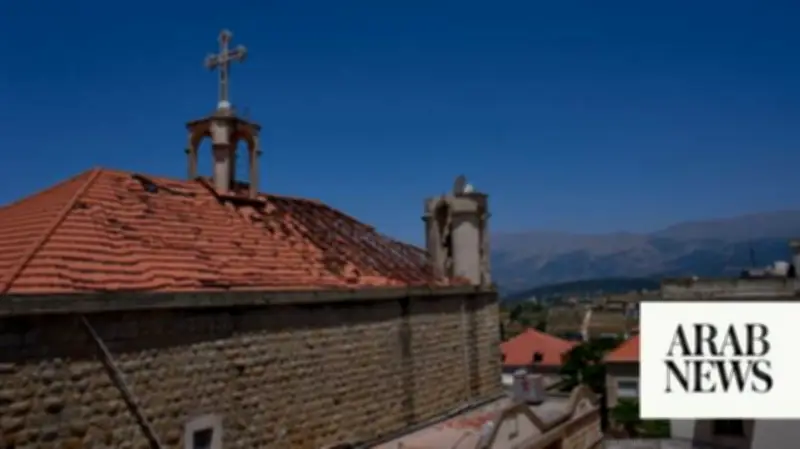
Mixed villages and towns on the edge of the security zone, spread over hills and valleys among orchards and olive groves, stand within sight of devastated neighbors. Residents vow to stay. The Shiite town of Khiam—now an empty white swath of flattened buildings controlled by Israel—can be seen from the Christian village of Qlayaa. Qlayaa's residents are effectively barred from reaching their olive groves in the valley between. "Now another season is lost," said Mayor Hanna Daher. A priest in Qlayaa was killed by shelling as he inspected an earlier strike, and a father and his two children were killed in a drone strike while driving to Qlayaa. Israel says it only targets militants. In Jdeidat Marjayoun, a house was bombed on suspicion of militant use, and rockets—believed to be from Hezbollah—damaged a church's dome. Solar panels, power transmitters, and water stations have also been hit.
El-Cheikh fled Dibbine in early March after Israel warned people to leave. In late May, Israeli forces raided Dibbine before withdrawing in early June. Her friend Lolitta Costantine huddled with her husband in their home in Jdeidat Marjayoun as fighting raged. Cracks from explosions run down the walls, windows shattered, doors knocked loose. She keeps shrapnel as a reminder. "We didn't know where the danger was coming from," Costantine said.

Tensions Rise as Displaced Are Turned Away
Shiites seeking shelter from the fighting have been turned away by those who fear Israeli strikes or eviction, aggravating tensions dormant since Lebanon's 1975-1990 civil war. When a Qlayaa resident hosted a friend from a Shiite village in his orchard, his house was bombed, said Mayor Daher. Other residents have asked Shiites seeking refuge to leave. "We told them, we don't want problems for you or for us," Daher said. Israel has warned Jdeidat Marjayoun's municipality not to allow in people displaced from neighboring villages, saying it could put the town at risk or force evacuation, the municipality said on social media. "We were forced to ask some to leave the town," said Father Philip Habib Oklahoma, the parish priest. "It caused many disagreements and tension. We are counting on faith to remain united." The Israeli military said it has warned people not to allow Hezbollah to use their villages, as Hezbollah operates in civilian areas, endangering residents.
During Israel's 1982-2000 occupation, the area was a bastion of the South Lebanon Army, a mostly Christian militia working with Israel. Some residents worry they will be unfairly painted as collaborators for staying. Few speak openly of tensions, fearing retaliation by Israel or Hezbollah. At a church visited by AP, a man shouted in exasperation that everyone had become suspicious of each other, even among Christians. He blamed Hezbollah for dragging Lebanon into the war, calling it a serious mistake.
Raids and Detentions Echo West Bank Tactics
Late one night in March, Israeli forces surrounded a building in the mostly Sunni village of Halta. They burst in and arrested Chadi Abdel-Al, who screamed "my heart" as he was beaten and dragged into a van, according to his mother Ayesha Al-Qaderi. In the commotion, a 15-year-old relative, Mohammad Abdel-Al, ran through the dark in his pajamas toward the house. Israeli soldiers shot him dead. A neighbor was wounded. The Israeli military said it detained the commander of a local militant group. In a separate incident, Israeli troops detained three farmers from Halta during a raid on a nearby village. They are among at least eight people detained by Israeli troops since March, according to Lebanese media. The Israeli military says they were suspected of involvement in militant activities and plots against its troops. "We still don't know why they kidnapped them. Maybe to instill fear in the village and to send a message that they see everyone," said Issa Abdel-Al, the community's leader. "It has become like the West Bank here," he added, referring to the occupied Palestinian territory. Al-Qaderi, who has heard nothing about her son, said: "I just want to know his fate."