Europe's Strategic Awakening After Greenland Confrontation
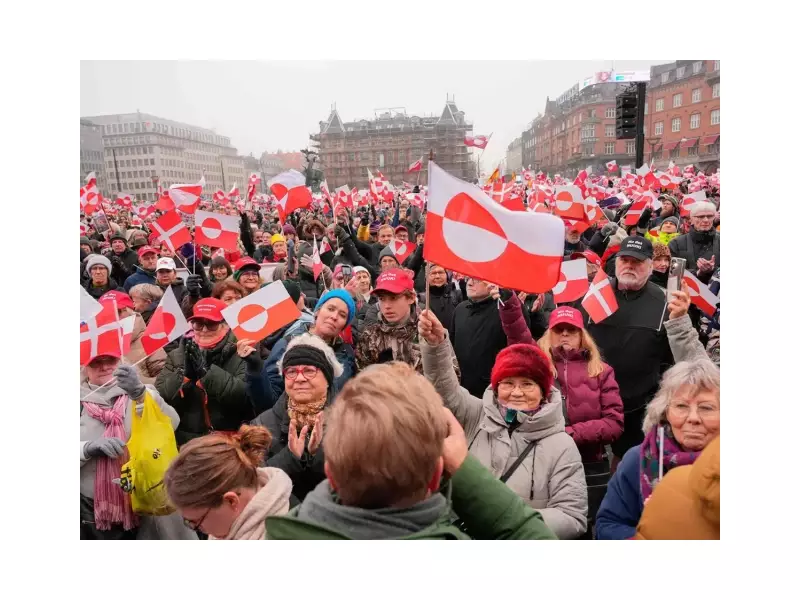
While European nations collectively resisted President Donald Trump's ambitions regarding Greenland, their leadership understands this episode represents merely the opening salvo in dealing with an increasingly assertive United States under his administration. The implications are monumental, considering the $2 trillion trading relationship between the European Union and the US, coupled with Washington's continued dominance within NATO and its crucial support for Ukraine against Russian aggression.
The Davos Turning Point
During a remarkable sequence at the World Economic Forum's annual gathering in Davos, Trump first disavowed any forceful acquisition of Greenland, then withdrew threatened tariffs against eight European nations obstructing his Arctic ambitions. Instead, he announced an ambiguous agreement concerning the island with NATO Secretary General Mark Rutte.
European officials believe this retreat resulted partly from their unprecedented firmness. Unlike previous tariff negotiations where Europe adopted more conciliatory positions, this time they unequivocally established that Greenland's status as Denmark's autonomous territory represented an inviolable red line.

"All this demonstrates that Europeans cannot permit American overreach," revealed an anonymous EU official speaking candidly about transatlantic relations. "We responded appropriately with firmness, but this conflict isn't concluded. My perception is we'll face continuous testing on similar matters."
Strategic Recalibration and Coalition Building
Having recognized the necessity of confronting Trump's demands, Europe now faces the complex challenge of reducing vulnerability in future engagements. "This path is arduous and will require sustained effort," observed Rosa Balfour of Carnegie Europe, noting that Europe possesses "far greater leverage than it has previously dared exercise."
Despite recent tensions, Europe isn't pursuing complete separation from its transatlantic partner. An emergency leaders' summit urged reinstating the EU-US trade agreement, whose ratification lawmakers suspended protesting Greenland developments. German Chancellor Friedrich Merz cautioned in Davos: "Despite recent frustrations and anger, we shouldn't hastily discard the transatlantic partnership."
Simultaneously, Europe advances "de-risking" initiatives addressing Trump's overt hostility, including accusations of European defense dependency and demands for market access. The Greenland dispute has accelerated discussions about extending Ukraine-style cooperation models—where nations provide voluntary security guarantees without veto powers—to other areas.
"We should expand 'coalitions of the willing' approaches, allowing others to join subsequently," suggested one official, citing collaborative artificial intelligence development as potential implementation.
Institutional Innovation and Economic Sovereignty
Europe explores multiple pathways toward strategic resilience. The "E3" coalition (France, Germany, Britain) demonstrates how non-EU states can participate in security frameworks, appealing to other nations affected by Trump's policies. Canadian Prime Minister Mark Carney emphasized during his Davos address: "Middle powers must collaborate—if absent from negotiations, we become the negotiated."
Another approach utilizes flexibility within EU legislation. In December, member states invoked emergency provisions to indefinitely freeze hundreds of billions in Russian assets, preventing pro-Moscow countries like Hungary from blocking measures and forcing fund returns.
The Emerging European Doctrine
Europe plans significant economic policy strengthening. Next month initiates legislation featuring "Made in Europe" requirements for strategic sectors and enhanced conditionality for foreign direct investment. European Commissioner Stephane Sejourne explained: "Some measures originally targeted reduced Chinese reliance, but actually help de-risk from various markets. This fundamentally transforms European doctrine in these sectors."

Unlike Canada, Europe isn't pivoting toward China to offset transatlantic strains, but actively pursues diversification elsewhere. Following the historic EU-Mercosur agreement, European Commission President Ursula von der Leyen indicated the bloc approaches a potential deal with India.
Security Realities and Future Trajectories
Despite defense spending increases and discussions about an EU army, analysts acknowledge Europe requires years to develop military capabilities adequate for emerging responsibilities including Arctic security reinforcement. The central question remains whether recent events will catalyze meaningful reduction in US dependencies.
Reflecting on Trump's Davos performance, Swedish Deputy Prime Minister Ebba Busch stated: "None of this surprises. The EU must strengthen its resolve." As trade data reveals German companies nearly halved US investments last year, Europe's strategic awakening continues evolving, balancing partnership preservation with necessary autonomy development in an increasingly unpredictable transatlantic landscape.