China has issued a firm rebuke to the United States following the capture and extradition of a key Venezuelan official, denouncing Washington's actions as a violation of international norms. The strong statement from Beijing defends Venezuela's sovereignty and challenges the US role on the global stage.
Beijing's Stern Condemnation of US Actions
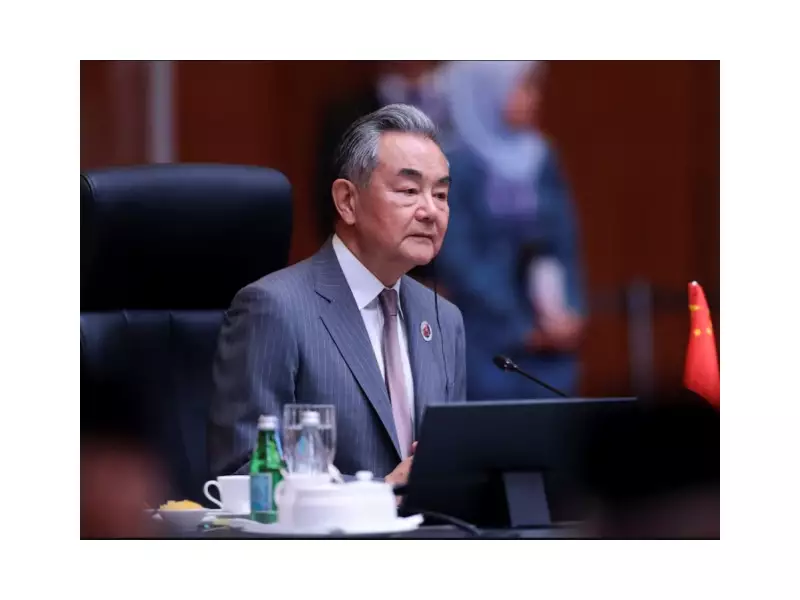
The Chinese foreign ministry spokesperson, Wang Wenbin, articulated a clear position during a regular press briefing. China firmly opposes the US capture of Alex Saab, a special envoy for Venezuelan President Nicolas Maduro. Saab was extradited from Cape Verde to the United States to face money laundering charges, a move Venezuela labels as a "kidnapping."
Wang Wenbin emphasized that this incident represents a typical case of "long-arm jurisdiction" and unilateral sanctions by the United States. He stated that such actions severely violate the basic norms governing international relations and undermine the stability of other nations. The core of China's argument is that no single country has the right to act as the "world's judge."

Defending Sovereignty and International Law
China's response is deeply rooted in its long-standing foreign policy principles. The spokesperson reiterated that all countries' sovereign rights and dignity must be respected. He called for the immediate lifting of what he termed "illegal unilateral sanctions" against Venezuela.
This stance aligns closely with Beijing's frequent criticisms of US foreign policy, which it often accuses of hegemony and bullying. The case of Alex Saab has become a flashpoint in this broader geopolitical tension. China urged the United States to cease its interference in Venezuela's internal affairs, framing the issue as a matter of justice and respect for international law.
Broader Implications for Global Diplomacy
The diplomatic spat over Saab's capture highlights the deepening divide between global powers on how international justice is administered. China's vocal support for Venezuela and its condemnation of the US sends a strong signal to other nations facing American sanctions or legal pressure.
This incident reinforces the growing alliance between Beijing and Caracas, with China being a major creditor and political supporter of the Maduro government. The principle that "countries cannot act as the world's judge" is likely to be a recurring theme in China's diplomatic rhetoric, especially in contexts where it perceives US overreach.
The international community continues to watch how this confrontation unfolds, as it tests the limits of unilateral legal actions against foreign state officials and the robustness of the principle of national sovereignty in an interconnected world.