Record Heat Wave Overwhelms Paris-Area Hospital
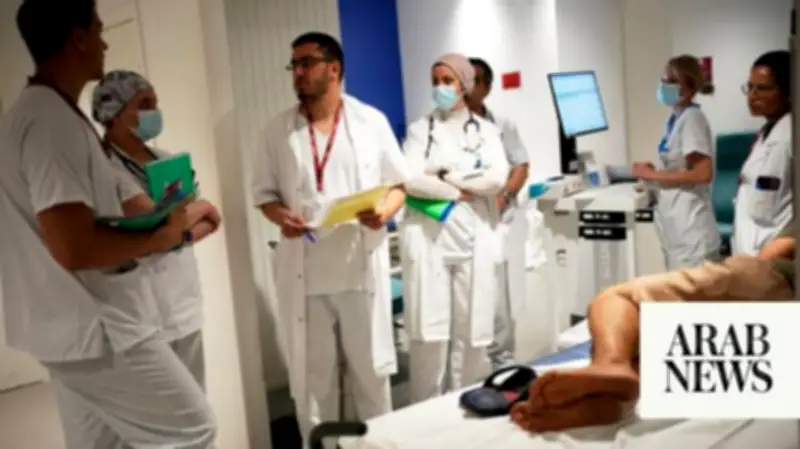
At the Paris-Saclay Hospital in Orsay, France, emergency medics faced a critical shortage of ice during a record-smashing heat wave last week. They needed ice to plunge patients into cold-water baths to rapidly lower their body temperatures and prevent deaths. Lacking an ice-making machine, staff turned to a fast-food restaurant and supermarkets for supplies. The hospital has since ordered its own ice machine, eagerly awaited for future heat events.
The heat wave, which battered France, the United Kingdom, and other countries before shifting eastward, exposed significant vulnerabilities in healthcare systems. Hospital director Cédric Lussiez described the experience as “horrible,” admitting, “We thought we were ready. We were not actually.” He noted that the hospital operated 24 hours a day to find new solutions in very short delays.
Government Response: Millions for Cooling Systems
French Prime Minister Sébastien Lecornu announced a 100-million euro ($114-million) investment this summer for cooling systems in hospitals and other infrastructure improvements. Following crisis meetings, the government is purchasing 30,000 air-conditioning units for health facilities, with first deliveries expected “at the end of the week, beginning of next week.” Lecornu stated, “It’s an absolute priority for us that, if the heat wave returns, the hospital situation be a lot less strained.”

WHO Warns of Harder Summers Ahead
The World Health Organization described the heat wave as “a dress rehearsal” for summers that “will be harder.” It emphasized that Europe is warming at more than twice the global average, and heat waves are no longer freak events. “Every summer we fail to prepare for them is a summer we pay for in lives,” the WHO said.
Emergency Department Overwhelmed by Heat-Related Cases
Dr. Nicolas Gonzales, head of the emergency department at Paris-Saclay Hospital, reported a surge of patients suffering from heat exposure starting June 20. “It was like a big mountain,” he said, lasting seven days. The first patient was a 50-year-old man found in a coma at home with a body temperature of about 40 degrees Celsius (104 Fahrenheit). His family reported he seemed fine one minute and unconscious the next. Subsequent cases included heart attacks, dehydration, kidney malfunctions, and other heat-related problems affecting all age groups, from children to the elderly.
“Heat is a physical assault on the body,” Gonzales said. “And when the body can no longer adapt — or, unfortunately, is no longer able to fight off that assault — you don’t feel it coming, and the heart can stop beating.”
Hospitals Urgently Upgrade Heat Defenses
While Paris-Saclay Hospital is new and air-conditioned, three older hospitals in its group lack adequate heat protection. During the heat wave, medicines had to be cooled with electric fans and blocks of ice, and student nurses were recruited to keep patients hydrated. The thermometer hit 33 degrees Celsius (91 degrees Fahrenheit) on the top floor of a psychiatric unit. Lussiez is equipping that unit with cool rooms on each floor and planning renovations, including moving a geriatric department to the newer hospital. “We’ll be in a better situation next week than we were last week,” he said.
Hospitals across Europe are now bracing for the next heat wave, recognizing that climate change makes such events a recurring challenge similar to the annual flu season.