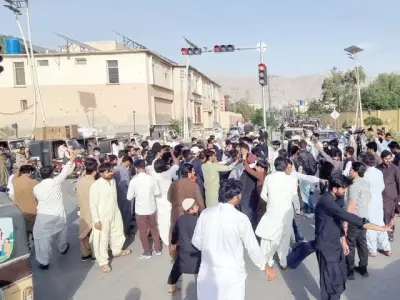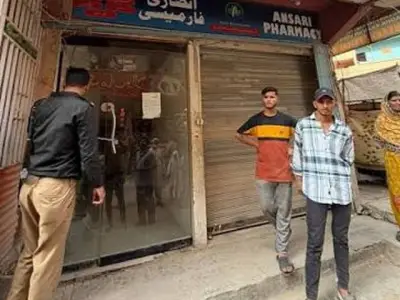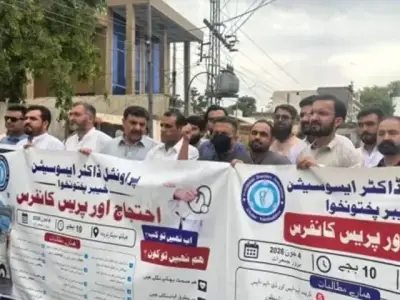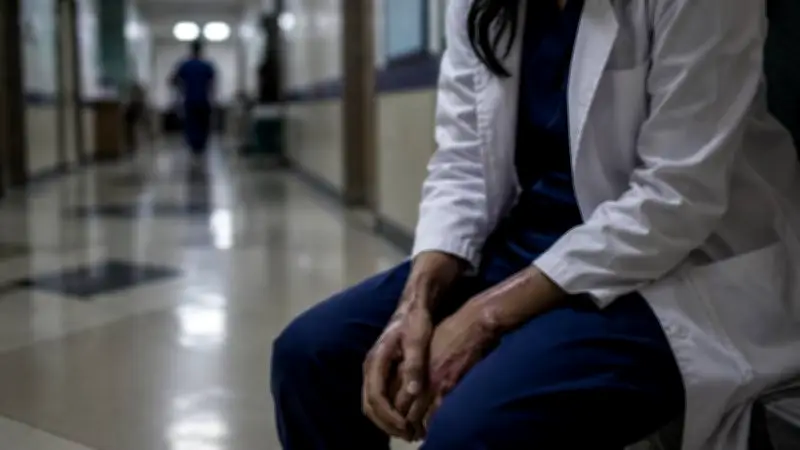
On 6 June 2026, Dr Mahnoor Nasir was on duty at Sandeman Provincial Hospital in Quetta when she was attacked with acid, severely burning her face, chest, and hands. This incident is not isolated but part of a broader pattern. According to the Acid Survivors Foundation (ASF), Pakistan records 200 acid attacks annually, with 80% of victims being women, categorising these attacks as gender-based violence. Official statistics indicate a declining trend, with the World Population Review estimating 80 cases in Pakistan in 2026. However, significant underreporting persists. Zohra Yusuf, former Chair of the Human Rights Commission of Pakistan, states that only 10% of cases reach court, meaning nine out of ten attackers evade justice. This silence is a state-sanctioned permission for future perpetrators. Thus, this attack should be viewed not as an individual incident but as a symptom of a deeply rooted systemic failure disproportionately impacting women.
Systemic Failures in Balochistan
In the underprivileged province of Balochistan, the female literacy rate is as low as 33%, compared to the national average of 54%, and drops below 10% in rural areas. Only a small fraction of girls have the opportunity and courage to pursue education and enter the professional arena. Dr Mahnoor Nasir was one such woman, a symbol of hard-earned achievement. However, incidents like these discourage families and instil fear of societal brutality. Beyond mismanagement and lack of security, the objectification of women is a primary cause of such attacks.
Socialisation and Hegemonic Masculinity
Young boys are socialised within families with hegemonic masculinity, a culturally dominant ideal associating 'real manhood' with dominance and authority over women. They internalise themselves as the norm, while girls are raised to be subordinate and treated as resources, denying them individual identity. When these boys grow up, they cannot accept women's personhood and independence. They expect subjugation, and if women disobey, they feel entitled to violence, including acid attacks. Such violence does not emerge in a vacuum; it is a product of unchecked societal norms.

Workplace Harassment
This socialisation manifests in everyday life before turning physical. In Pakistan, over 85% of female workers encounter workplace harassment, according to the Home-Based Women Workers Federation (HBWWF). They cannot raise their voices due to risks to employment and reputation. They endure silently until physical violence occurs, as though that alone constitutes proof of mistreatment. As Raania Ahsan writes in The News on Sunday, 'The real measure of justice is not how society reacts after harm, but how it prevents harm before it happens.'
Need for Reform
Reform is urgently needed. Parents must raise sons with an equal sense of responsibility, teaching gender equality, emotional accountability, and respect for women's autonomy. Schools should embed these topics in curricula from early grades to make mutual respect second nature. The government must enact stronger harassment and discrimination laws with proper enforcement and accountability mechanisms. Mandatory workplace training and awareness programmes should be provided to prevent harm and create inclusive spaces. Dr Mahnoor Nasir deserved to heal patients, not become one. Unless we change what we teach our sons and demand from our institutions, no woman is truly safe.