In Mongbwalu, a town at the epicenter of the Democratic Republic of Congo's latest devastating Ebola outbreak, resident Laureine Sakiya stands out. Unlike many neighbors, she believes the virus exists after witnessing deaths firsthand. The outbreak, centered in northeastern Ituri province, is met with widespread denial and criticism of the government's response, fueled by decades of neglect and conflict.
Outbreak Spreads Across Borders
Gold-diggers and hawkers traverse mineral-rich, conflict-torn Ituri. Mud-covered motorbikes are common in Mongbwalu, about 100 kilometers from Uganda and 200 kilometers from unstable South Sudan. Within weeks, the outbreak has spread to several provinces and into Uganda, prompting the World Health Organization to declare it an international emergency. Of 339 suspected Ebola cases in Mongbwalu, 88 have died, per official tolls.
“The authorities need to bring us vaccines,” said Sakiya, 26. However, no vaccine or treatment exists for the Bundibugyo strain responsible for the DRC's 17th outbreak. Since May 15, the health ministry reports 204 deaths and 867 suspected cases nationwide.

Inadequate Response and Local Fears
At the local hospital, a modest building nestled in hillside trees and grass, healthcare workers in full hazard suits rinse floors and walls with chlorine. Handwashing relies on plastic buckets, highlighting insufficient resources. Local aid groups and Doctors Without Borders (MSF) have set up tents for isolation. “The epidemic is out of the ordinary,” said MSF coordinator Florent Uzzeni in Bunia, noting official tolls are likely undercounts due to limited testing capacity.
Past Ebola outbreaks have sparked violence among wary locals. Some believe the latest epidemic is a “mystical malady,” a common belief in remote DRC areas. “At the beginning, people believed it was a coffin affair,” said Jonathan Imbalapay, a civil society leader in Mongbwalu.
The Coffin Incident
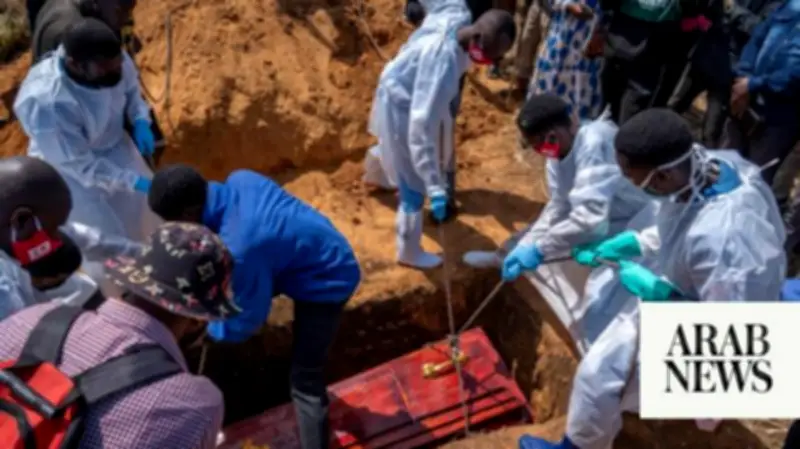
The first suspected case was identified in Bunia. After the man's death, his family brought the body 80 kilometers to Mongbwalu on notoriously bumpy roads, damaging the coffin and exposing the Ebola-ridden corpse. Traditional leaders wanted to burn the casket. Initial tests in a provincial lab failed to identify Ebola, allowing panic and disease to spread. Only when samples reached Kinshasa's biomedical research lab, nearly 1,800 kilometers away, was Ebola confirmed.
Adam Hussein, a 35-year-old representative for traditional faith healers, expressed concern about denial. “I worry about those who say this disease is invented,” he said, urging precautions.