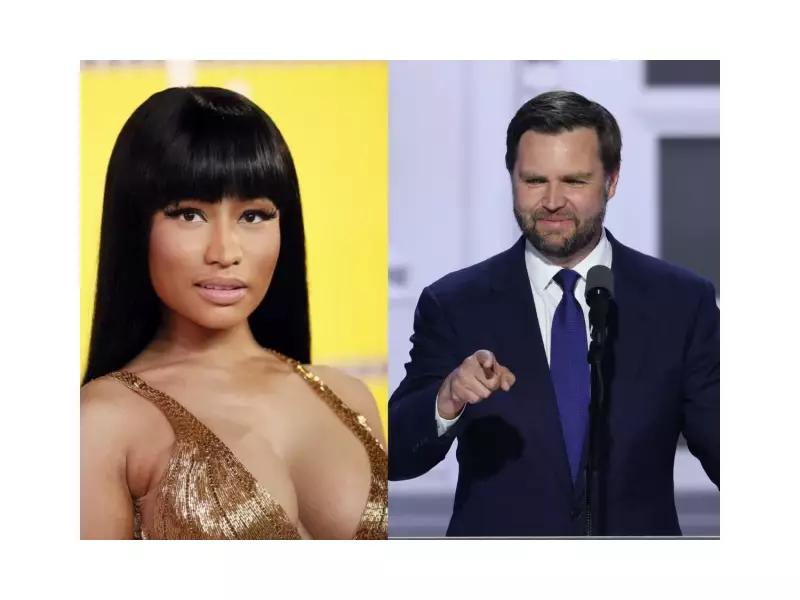
American rapper and global pop icon Nicki Minaj has set social media ablaze and triggered a fresh wave of political discourse following her pointed comments about Republican Senator JD Vance. The incident unfolded during a high-profile Turning Point USA (TPUSA) event in Detroit, where Minaj, a featured speaker, made a remark that has since dominated headlines.
The Viral Moment at TPUSA's Detroit Gathering
During her appearance at the conservative youth organization's event, Nicki Minaj did not hold back her opinions on the current political landscape. While addressing the audience, she directly targeted Ohio Senator JD Vance, a key figure in former President Donald Trump's political orbit and a potential vice-presidential pick. In a moment that quickly went viral, Minaj referred to Vance as an "assassin."
The context of her statement tied into broader criticisms of political rhetoric and its consequences. Minaj appeared to be drawing a link between aggressive political language and real-world violence, though she did not elaborate with specific details about Vance during the brief clip that circulated online. The event, aimed at mobilizing young conservative voters, suddenly found itself at the center of a cultural and political firestorm, thanks to the superstar's unfiltered commentary.

Reactions and the Ensuing Social Media Storm
The reaction to Minaj's "assassin" label was swift and polarized. Supporters of the rapper and critics of Senator Vance applauded her for speaking bluntly about politicians she perceives as dangerous. They shared the clip widely across platforms like X (formerly Twitter) and Instagram, using hashtags to amplify the message.
Conversely, conservative commentators and supporters of JD Vance condemned the remark as inflammatory, irresponsible, and a dangerous escalation of political demonization. They argued that such language from a figure with Minaj's massive platform, particularly one speaking at a political event, could incite further division and even hostility. The debate spilled over into discussions about the role of celebrities in politics and the boundaries of acceptable criticism.
As of now, there has been no public response or statement from Senator JD Vance's office addressing Minaj's comments. The silence from his camp has only fueled more speculation and discussion online about the impact of such accusations.
Analyzing the Broader Implications
This incident highlights the increasingly blurred lines between pop culture and partisan politics, especially in the highly charged atmosphere of an election year. Nicki Minaj's involvement with TPUSA, an organization known for its staunch conservative activism, is itself a notable crossover. Her decision to use that platform to launch a sharp attack on a prominent Republican senator underscores how celebrity influence is being wielded in new and unpredictable ways.
The use of the word "assassin" is particularly significant. It moves beyond typical political criticism into a realm of accusation that carries severe connotations. In an era where political violence and threats are grave concerns, language of this nature is scrutinized for its potential to inspire real-world actions. The event puts a spotlight on the power and responsibility of influential voices in shaping public dialogue.
For audiences in Pakistan and internationally, the episode serves as a fascinating case study in American political culture. It demonstrates how a single phrase from a global music star can instantly refocus political conversation, generate millions of impressions, and force a examination of rhetoric and reputation. The fallout from Minaj's comments is likely to linger, influencing perceptions of both the rapper and the senator as the U.S. election cycle intensifies.