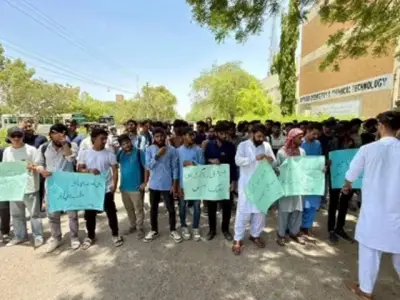
Pakistan's Youth Unemployment Crisis: Skills Gap Demands Urgent Education Reform
In Pakistan, millions of graduates enter the job market each year with high hopes, only to face a harsh reality: a degree alone no longer ensures a secure future. As a student observing the challenges of today's employment landscape, it is clear that practical skills now determine employability, yet many find their education lacking in this critical area.
Alarming Unemployment Statistics Highlight Structural Issues
According to the Pakistan Bureau of Statistics' Labour Force Survey for 2024–25, the national unemployment rate has reached 7.1 per cent, translating to nearly 5.9 million individuals without jobs. This figure is particularly concerning for youth, who experience disproportionately high unemployment rates. The survey underscores a growing structural inefficiency in the education-to-employment pipeline, with educated individuals and women facing persistent joblessness.
The Higher Education Commission (HEC) has acknowledged this gap in a 2025 statement, emphasizing that "universities can no longer operate in isolation from the realities of the labour market." This admission points to a critical need for systemic change to address the mismatch between academic qualifications and market demands.

Bridging the Gap: A Call for Skill-Based Education
To combat this crisis, experts argue that universities must urgently integrate skill-based training, internships, and industry partnerships into their curricula. By equipping students with essential competencies such as communication, problem-solving, and digital literacy, educational institutions can better prepare graduates for the competitive job market.
Key recommendations include:
- Revising academic programs to include hands-on, practical modules.
- Fostering collaborations with private sector companies for real-world experience.
- Emphasizing soft skills and technological proficiency alongside traditional degrees.
Without such reforms, Pakistan risks leaving its youth unprepared in an increasingly globalized and rapidly evolving economy. It is imperative for the education system to prioritize skill-building to ensure that graduates can effectively compete and contribute to national growth.
Fatima Irfan, Bhera.