During the winter season, when motorways often closed due to dense fog, the writer frequently traveled by train across Pakistan. Hours were spent waiting at railway stations, and nights passed in conversation with complete strangers. Each passenger carried memories of loved ones, and the rhythm of wheels on tracks, combined with shared stories, made every journey memorable. Even now, the sight of a train brings back those foggy nights and candid exchanges.
An Evening at Raiwind Railway Station
One evening, the writer was at Raiwind Railway Station for a regular walk. Raiwind, an administrative subdivision of Lahore District, occasionally appears in international headlines as the hometown of former Prime Minister Nawaz Sharif and the site of one of Pakistan's largest religious congregations. The railway station is a junction where most trains stop, allowing passengers to board or alight. Regular walkers, passengers, and blaring train horns create a lively atmosphere.
Within an hour, three trains—Khyber Mail, Musa Pak, and Awam Express—arrived one after another, flooding the platform. Despite earphones blocking the noise, the writer observed the crowds brushing past. Meanwhile, a Walima ceremony of a Meewati family continued unhindered. The caste was guessed from the words "chhora" (boy) and "chhoori" (girl) uttered by guests. The writer recognized these terms due to sharing house walls with an influential Meewati family.

The Wedding Venue and Its Setting
The house hosting the marriage stood twenty meters from the station on the city side, just a hundred meters from the Pakistan Railways Police Station (locally called the Railway Thana). When trains arrive, policemen with rifles patrol the platforms, eyeing unfamiliar faces with suspicion while greeting regulars. That day, their attention also turned to the humble wedding venue.
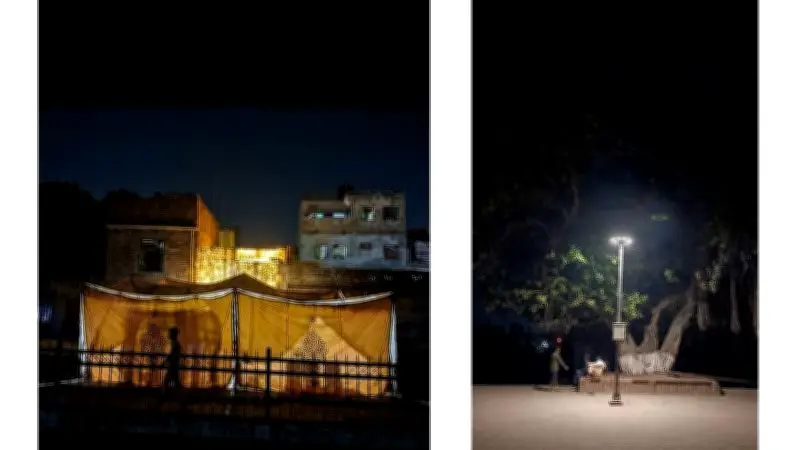
Raiwind Railway Station was built during the British Raj, and some nearby houses date back to pre-Partition times. The writer has seen such houses with arched doorways, old wooden doors, and names inscribed above entrances, evoking eras from novels and films. However, the wedding house was only three or four years old. Its facade was modestly lit with yellow fairy lights, and a small tent made of yellow tarpaulin and bamboo shared the warm glow. Two deghs (large metal cauldrons) sat over a wood fire, with a cook stirring ingredients using a long-handled ladle, shielding his eyes from smoke.
Children and Their Games
Children between eight and twelve played various games. Some boys had discolored tongues from licking colorful popsicles, leaving stains on the collars and cuffs of their white starched kameezes. They continued playing in the dirt, seemingly oblivious to potential scoldings from their mothers. The writer reflected that children's joy would vanish if they burdened themselves with consequences of innocent actions.
Young girls wore bright pink and orange dresses with matching khussas. Zari and gotta work adorned hems, and jhoomar tikkas on foreheads added grace. Five or six girls played Keekli (or Kikli), a game where they interlock hands, lean backward, and spin rapidly. Typically, girls sing songs during Keekli, but these younger ones simply played while others cheered.
A Fleeting Moment of Joy
The writer kept walking, pausing briefly to watch the unexpected scene that brought immense joy. A phone call from home broke the reverie, reminding the writer it was well into the night and more than fifteen kilometers had been walked. The fragrance of fresh roses and jasmine from the house and tent scented the air, compelling a fifteen-minute stay.
The next day, when passing the same house, nothing remained: no tent, no fairy lights. Only ash from burnt wood was left. The fragrance of roses and jasmine had given way to the scent of joss sticks burning on a nearby grave.