

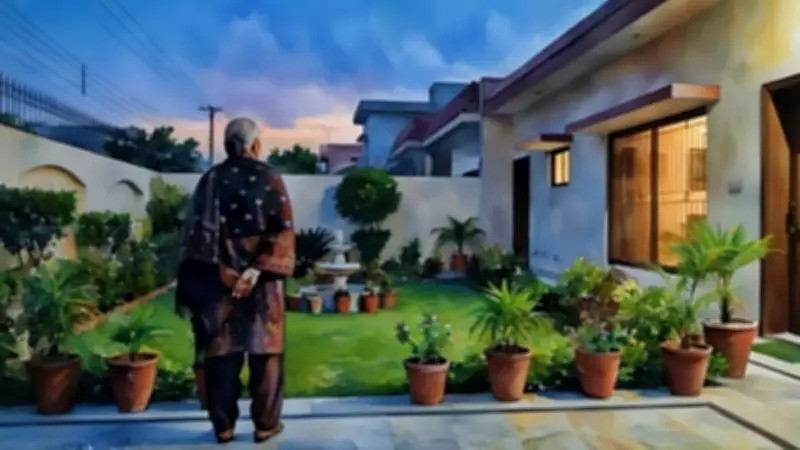
The Unfathomable Pain of Losing a Young Soul
My eldest child recently experienced the tragic loss of a childhood friend in a hit-and-run accident. Over the years, this young man had become almost like family—a loving son, brother, and friend, known as an adventurer, storyteller, musician, and the life of every gathering. Blessed with every gift except the gift of years, his death has left a void that words struggle to fill. No matter how prepared one might think they are, death always splits something open, but a child's death is an entirely different realm. It represents not just loss but an inversion, a glitch in the natural order, akin to sunset at dawn or a story abruptly jumping to its end.
Millions of years of evolution have not equipped humans with the ability to cope with such a tragedy. The grief embeds itself forever in bereaved parents, slipping into their innermost recesses and altering them at a cellular level. We all know at least one set of parents who carry this burden. In the days following the fatal accident in England and before the funeral in Pakistan, I often thought of messaging the bereaved mother but found myself unable to do so. I had no adequate words, only verses in Urdu and Punjabi that give voice to thoughts too deep for ordinary mortals cursed with a crushing poverty of language.
The Cultural Depth of Mourning in South Asian Traditions
I kept reflecting on the dear boy returning home from saat samundar paar (across the seven seas)—an old incantation from our elders, infused with impossible distances and longing. While factually inaccurate, in those moments, it felt truer than any geography lesson. Hazy memories surfaced of handwritten condolence letters in chaste Urdu addressed to my parents when my grandparents passed away in quick succession during my childhood. My heart broke anew for my parents, who were younger than I am now, having lost the shelter only a parent can provide, yet finding refuge in the elegance of handwritten condolences.

I was almost tempted to write a condolence letter myself but doubted my ability to trace the Urdu alphabet deftly. This highlighted a broader realization: the pitiful inadequacy of the English language in cradling our grief, metaphors, idioms, and cultural, religious, and emotional nuances. How do you explain to someone unfamiliar with it the finality, stoicism, and continuity encapsulated in Inna lillahi wa inna ilayhi raje'un (To Allah we belong and to Him we must return)? This phrase carries an entire cosmology where death is not a departure but a return to origin, reminding us that our years here are lent to us all too briefly.
Poetic Resonance in Urdu and Punjabi Verses
Having lost seven children, Mirza Ghalib captures a culturally specific stage of grief where the immediacy of loss allows for a strange, momentary irreverence toward the promise of Judgment Day. Within the ache of ancestral words and the deep river of verses in Urdu and Punjabi, our grief and understanding of life and death find the deepest resonance. These are languages where dukh (grief) rhymes with sukh (joy), and great masters mapped mourning long before psychologists codified the stages of grief.
Couplet after couplet, rich in lived experiences of personal losses, are rendered universally and timelessly, refusing to adhere to linear timelines or neat categories. Every word acts as a mirror for the mourner, intensely felt and enshrined in the diction of our ancestors. How do you explain to those who don't speak the language the poetic profundity of supurd-e-khaak? Anwar Masood, widely loved for his humorous poetry, wrote a single, searing couplet for his beloved wife: "Khaak main dhoondte hain sona log, Humne sona supurd-e-khaak kiya" (Some search for gold among dust, Some of us, entrust the dust with our gold).

Ghalib and the Stages of Grief in Religious Contexts
Mirza Ghalib, who lost seven children to infant mortality and a foster son in youth, penned: "Jaate hue kehte ho Qayamat ko milenge, Kya khoob Qayamat ka hai goya koi din aur" (You left, the promise is to meet on the Day of Judgment, How absurd! As if today were anything less than that day!). This couplet names a stage of grief culturally specific to societies steeped in religious tradition—irreverence, unthinkable in any other moment but mandated by the immediacy of loss. How does one explain the strange sanctity of such momentary irreverence?
Then there is the grief endemic to mystical traditions, permeating arifana kalam and kaafis, where all sorrow pales before the ultimate sorrow: separation at birth from the Almighty. Shah Hussain transforms this perennial grief into a tangible metaphor: "Dukhan di roti, soolan da saalan, aahen da balan baal ni, Maaye ni main kinoon aakhan dard vichoray da haal ni" (Bread kneaded from sorrow, curry made of thorns, simmered over a fire fueled by wails, O Mother, with whom do I share the pangs of this wretched separation?). In the aftermath of tragedy, this image—Shah Hussain's impossible meal—kept recurring, offering words that did justice to the hurt without pretending toward premature closure.
Funeral Metaphors and Communal Mourning
Funerals of the young have traditionally been likened to a wedding procession that will never be. Faiz Ahmad Faiz employs this metaphor in Falasteeni Bachche ke Liye Lori (A Lullaby for the Palestinian Baby): "Teri baaji ka dola paraye daes gaya hai" (Your elder sister's palanquin has left for an unfamiliar land), a quietly devastating reference to mass murder. Similarly, poet Aslam Kolsari eulogises his school-going son: "Jo phool sajaane thay mujhe teri jabeen par, Bheegi hui mitti par phelaaye nahin jaate" (Flowers once meant to grace the sehra over your brow, How does one scatter them over the damp mud of your grave?).
At every funeral, there comes a moment when you turn from the periphery into the main character, pulled backward through memory, stirring ghosts of griefs past. In that moment, you ache to embrace those now held in the earth's eternal embrace, thinking of Iqbal's lines: "Haan dikha day aye tassawur phir woh subah shaam tu, Daur peeche ki taraf aaye gardish-e-ayyam tu" (In my mind I relive those days and those nights, For a fleeting moment, I turn backwards the march of time).
The Cyclical Nature of Grief and Poetic Reconciliation
When pain settles deeper, festive occasions ironically intensify the sense of loss, as recognized in the age-old tradition of visiting bereaved families on the first Eid after a loss. Mian Mohammad Bakhsh voices this: "Eidan tay Shabratan aayiyaan, saare loki ghar noo aaye, O naeen aaye, Mohammad Bakhsha, jehray aap hathi dafnaye" (Eid and Shab-e-Barat came; everyone returned home, But not those, O Mohammad Bakhsh, whom we buried with our own hands).
Over time, grief takes many forms. Some reconcile with the deceased's new abode, directing love to their final resting place, as in Allama Iqbal's tender prayer for his mother: "Aasmaan teri lehed pay Shabnam afshani karey, Sabza o lala iss ghar ki nigehbani karey" (May the sky bathe your grave in dew, May flowers and verdant greens watch over your new abode). Others experience transcendence, where death is not severance but ascension to a purer self, captured by Bulleh Shah: "Bulleh Shah asaan marna naahin, Gorr peya koi horr" (Bulleh Shah the self never dies, No mortal dwells in that grave).
Conclusion: The Eternal Echo of Parental Grief
Beyond all binaries—neat and messy, codified and free-flowing—are parents who outlive their children, condemned to the cyclical nature of grief. In Ghalib's lament, they find a mirror: "Maqdoor Ho To Khaak Se Pouchon Ke Ae Laeem, Tu nay woh ganj haiye garan maaya kya keeye?" (If I could, I would ask the dust: O wretched one, What did you do with those priceless treasures?). This reflection underscores how Urdu and Punjabi poetry provide a profound language for mourning, offering solace where other forms of expression fall short.
