Return to Sednaya: A Filmmaker's Confrontation with the Past
When Tawfik Sabouni stepped back inside Syria's notorious Sednaya prison after the fall of Bashar Assad's regime in December 2024, the first thing that struck him was not the silence but the smell. "The first thing that struck me when I went back was its size. I had never imagined it to be so immense," the Syrian Belgian director told Arab News. "Only one thing remained exactly as I remembered it: the smell. That particular smell of the prison, deeply embedded in my memory, was still there, unchanged."
Sednaya, a military prison north of Damascus, became synonymous with the worst abuses of the Assad era and was chillingly nicknamed "the other side of the sun" by Syrians who knew that those taken there were unlikely to return. Years after his release, and in the immediate aftermath of the regime's fall, Sabouni went back — this time not as a detainee, but as a filmmaker.
The Documentary: A Collective Reconstruction of Trauma
His debut feature documentary, The Other Side of the Sun, follows five men, including Sabouni himself, who were all held in Sednaya at different times and who returned to the former torture prison to reconstruct what they endured there. Premiering in the Panorama Dokumente section of the 76th Berlin International Film Festival in February 2026, the film won second prize in the Panorama Audience Award for documentary. It has since traveled to SXSW London, where it screened in the festival's official competition earlier in June, and is continuing its festival run in the Middle East, Africa, Europe and Asia.

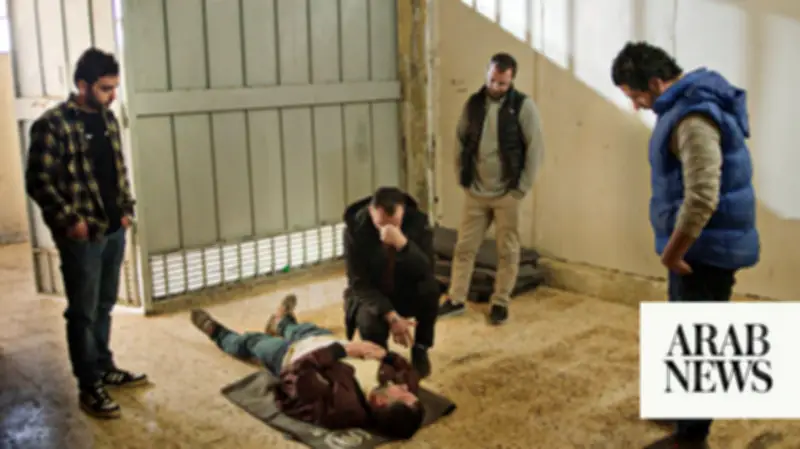
The film has drawn critical acclaim for its stripped-back, emotionally taut approach to one of Syria's oldest wounds — a confrontation with the lingering scars of imprisonment that leaves the viewer quietly shattered. There are no graphic images, no spectacle. Instead, Sabouni relies on the weight of a body in a cell, the sound of a door, the tension in a gesture — all to evoke the bestialization at the core of Assad's prison system.
Why Reenactment Was the Only Honest Approach
For Sabouni, that approach was the only honest way to confront a place that still haunts survivors and families of the disappeared. "I did not want to make a film based solely on interviews or archival material. My choice was to make cinema — a film that tells the past through our bodies, our movements and our memories," he said. Choosing reenactment, he insists, was less a stylistic flourish than a necessity. "Our bodies still carry the marks of prison. For survivors, reenacting and recounting are inseparable," he said. "Throughout the making of the film, one question stayed with me: How can we represent the violence of our experiences? How can we convey something of that reality without reducing it to words or to spectacular images?"
To try to answer that question, Sabouni brought together four other former detainees who, like him, had passed through Sednaya's cells. "The idea was that each person's story could help the others shape their own, bringing to light details or emotions that might not have been recovered alone." What began as a shared project of testimony soon became a bond of friendship strong enough to sustain them through the shoot. "Over time, we became friends. This friendship gave the film a special strength, but also the energy needed to pursue this difficult work," he said, adding that sharing such intense trauma was only possible because of the trust they placed in him and in one another. "We were there for each other. When someone was going through a difficult moment, we stood by them; and when I myself was struggling, they were there to support me."

Memory as a Shield Against Future Dictatorship
Filmed inside the former prison, their reenactments turn empty corridors and cells into a charged stage where memory is given physical form. With deliberate restraint, the film confronts viewers with the enduring marks of imprisonment and lends its space not only to these five men, but also to the almost 180,000 people who have disappeared in Syrian prisons and whose families are still searching for answers. "A film does not deliver justice. Justice is delivered in a courtroom. A mother who lost her son in Sednaya will not get justice by watching my film," Sabouni said. The aim, he stressed, was "to tell our stories, to pass them on, to bear witness. But I believe a film can contribute to something else: It can prevent forgetting, and help us never to give up on this demand for justice."
He described the film as a "meeting place, a rendezvous between former detainees, between the living and the dead. A space where we find the absent, the missing, those whose names have been erased or forgotten. My hope is that Syrians will never forget what happened. Not to remain prisoners of the past, but to learn from this history and from the immense price that was paid for freedom. I hope this memory will help us build a more just and democratic future. My fear, on the other hand, is that oblivion, impunity, or divisions will pave the way for the repetition of the same mechanisms of domination. Memory is not only a duty toward the victims; it is also a shield against the birth of a new dictatorship."