

Karachi Hosts Major Art Exhibition to Commemorate Sadequain's 39th Death Anniversary
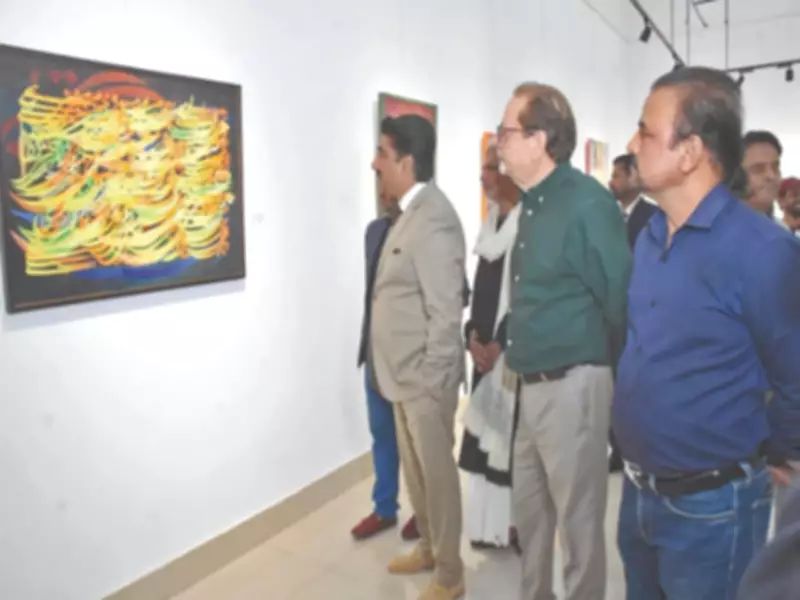
The Arts Council of Pakistan Karachi became a vibrant cultural hub as it organized a significant art exhibition titled "Rosh-e-Qalandar" to mark the 39th death anniversary of the legendary Pakistani artist Sadequain. This special event brought together artists, art enthusiasts, and prominent cultural figures to pay tribute to one of the country's most celebrated painters, whose influence continues to shape contemporary Pakistani art.
Official Inauguration and Exhibition Details
The exhibition was formally inaugurated by Sindh's Minister for Culture, Syed Zulfiqar Ali Shah, alongside Arts Council President Ahmed Shah. Curated by Farukh Shahab, Chairman of the Fine Art Committee, the showcase features artworks directly inspired by Sadequain's internationally acclaimed paintings. A total of 27 artworks by contemporary artists have been thoughtfully displayed, each piece reflecting Sadequain's enduring artistic legacy and his profound impact on modern Pakistani art.
Participating Artists and Ministerial Remarks
The exhibition includes works by numerous prominent artists, demonstrating the wide-reaching influence of Sadequain's artistic vision. Participating artists featured in the exhibition include:

- Masood A. Khan
- A.S. Rind
- Moeen Farooqui
- Tanveer Farooqui
- Khalid Khan
- G.N. Qazi
- Munawar Ali Syed
- Faheem Rao
- Arif Hussain Khokhar
- Imran Zaib
- S.M. Raza
- Muhammad Kashif
- Shamsuddin
- Qasim Bugti
- Amina Khan
- Zeenat Khan
- Akash Jeevraj
- Kiran Aslam
- Zoya Abbas
- Sohana Ilyas
- Asim Naqvi
Speaking at the inauguration ceremony, Culture Minister Syed Zulfiqar Ali Shah emphasized that the exhibition was organized specifically to honor Sadequain's substantial artistic contributions and to introduce younger generations to his remarkable body of work. He noted that artists from across Pakistan had enthusiastically participated, interpreting Sadequain's iconic themes through their own unique artistic expressions.
The minister described Sadequain's work as globally recognized, adding that many of his original pieces have become rare and are no longer easily accessible to the public. He strongly emphasized the need to actively promote the work of Pakistani artists to strengthen the country's cultural identity on the international stage and encouraged young artists to learn from the legacy of master painters like Sadequain.
Exhibition Impact and Future Plans
The exhibition attracted a substantial gathering of artists and members of the broader art community, highlighting the continued relevance of Sadequain's artistic vision. Officials from the Arts Council noted that such exhibitions continue to provide an essential platform for emerging talent within Pakistan's vibrant art scene.
Known for his monumental murals and distinctive calligraphic style, Sadequain remains one of Pakistan's most influential artists, whose work continues to inspire successive generations of creative minds. Organizers also announced ambitious future plans, including holding a conference in Sadequain's name and establishing a permanent gallery dedicated exclusively to preserving and showcasing his artistic legacy.
Sadequain's Background and Artistic Significance
Sadequain was born on 30 June 1930 in Amroha, into a family with a strong tradition of calligraphy. Following the partition of 1947, he migrated to Pakistan with his family, eventually settling in Karachi's Nazimabad neighborhood. In the late 1940s, he joined the Progressive Writers' and Artists Movement, marking the beginning of his formal artistic journey.
His exceptional talent was discovered by Huseyn Shaheed Suhrawardy, who played a crucial role in bringing Sadequain into the artistic limelight. The artist further honed his skills during a significant period spent in Paris, where he augmented his technical abilities and artistic perspective.

Artistic Movement and Contributions
Sadequain was widely praised for his innovative calligraphy by numerous critics of South Asian art. He became an integral part of the broader Islamic art movement known as the Hurufiyya movement, which emerged independently across North Africa and parts of Asia during the 1950s. This movement represented a deliberate attempt by artists to combine traditional art forms, particularly calligraphy, as graphic elements within contemporary artworks.
Hurufiyah artists consciously rejected Western art concepts, instead searching for new visual languages that authentically reflected their own cultural heritage. These pioneering artists successfully transformed calligraphy into a modern aesthetic that was both contemporary and distinctly indigenous. Prior to Sadequain's groundbreaking work, only a few painters in Pakistan had experimented with calligraphy as a serious artistic medium.
Pioneering Role and Public Art Philosophy
Sadequain is rightly considered a pioneer of this style, bringing calligraphy into the mainstream as a respected art form and influencing subsequent generations of Pakistani artists. Beyond his technical innovations, Sadequain served as a thoughtful social commentator who preferred to paint on public buildings rather than private spaces owned by wealthy individuals.
He fundamentally disagreed with the notion that art should be accessible only to a privileged few, believing instead that his work should be enjoyed by the broader public. His murals are characteristically dense and tightly packed with imagery, carefully designed to adequately render their lofty subjects and themes.
Monumental Murals and Architectural Legacy
Sadequain created more than thirty-five monumental murals that adorn significant public buildings across Pakistan and beyond. These impressive works can be found in numerous important locations, including:
- The halls of the State Bank
- Frere Hall in Karachi
- Lahore Museum
- Punjab University
- Mangla Dam
- Aligarh Muslim University
- Banaras Hindu University
- Indian Institute of Geological Sciences
- Islamic Institute in Delhi
- Abu Dhabi Power House
His paintings and calligraphies in the building of the Islamic Institute in Delhi alone cover an astonishing more than seven thousand square feet of space. Sadequain painted his earliest murals at Jinnah Hospital and PIA headquarters during the 1950s, though these particular works have unfortunately disappeared, with their current fate remaining unknown.
The "Rosh-e-Qalandar" exhibition serves as both a tribute to this artistic giant and a testament to his enduring influence on Pakistan's cultural landscape, ensuring that his visionary work continues to inspire and educate future generations of artists and art lovers alike.
