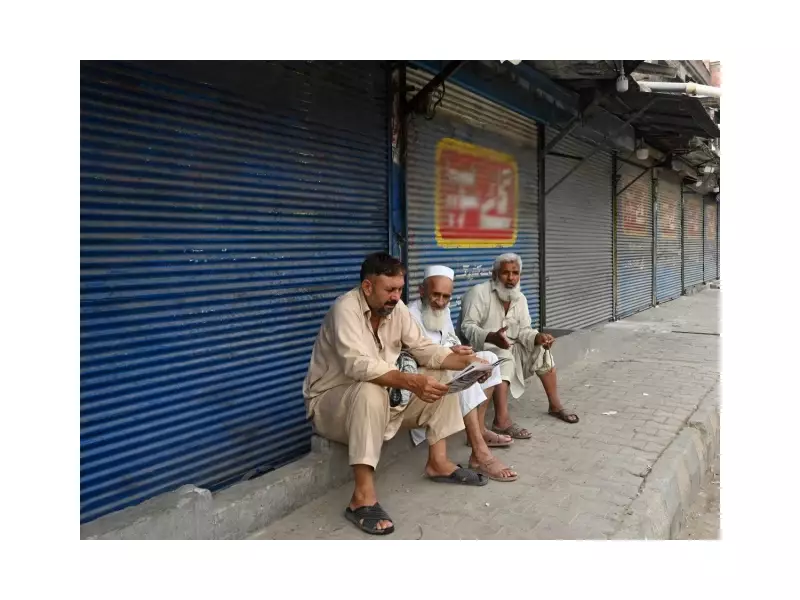
In a stark and unprecedented declaration, the business community of Pakistan has labeled the year 2025 as the most devastating period for commerce and industry in the nation's entire history. This grim assessment comes from the Federation of Pakistan Chambers of Commerce and Industry (FPCCI), the country's apex trade body, which has issued a dire warning about the survival of the private sector under current economic conditions.
A Perfect Storm of Economic Hardships
The FPCCI, representing the collective voice of traders and industrialists across Pakistan, has pinpointed several critical factors converging to create an existential threat. The relentless surge in inflation stands as a primary culprit, eroding the purchasing power of ordinary citizens and strangling demand for goods and services. This is compounded by what the business community describes as an oppressive and unsustainable tax regime enforced by the Federal Board of Revenue (FBR).
Furthermore, the crippling cost of energy has made it nearly impossible for factories and shops to operate profitably. Exorbitant electricity and gas tariffs have forced many businesses to scale down operations or shut down entirely. The FPCCI also highlighted the severe liquidity crunch, where high-interest rates have made borrowing prohibitively expensive, stifling investment and expansion. This combination has created an environment where keeping a business afloat, let alone growing it, has become a Herculean task.

Immediate Demands for Government Intervention
Faced with this crisis, the FPCCI has not just raised an alarm but has presented a clear list of demands to the government. The chamber is calling for immediate and decisive intervention to prevent a complete economic collapse. Their primary demands include a significant reduction in the policy interest rate to ease the credit squeeze and a substantial slash in electricity and gas tariffs to lower the cost of production.
Equally critical is their call for a complete overhaul of the tax collection system. The business leaders argue that the current approach focuses on squeezing existing, documented taxpayers rather than broadening the tax net. They demand fairness, transparency, and a reduction in the overall tax burden to allow businesses to recover. The FPCCI warns that without these urgent measures, widespread layoffs and permanent business closures are inevitable, which would have catastrophic social consequences.
The Broader Impact on Pakistan's Economy
The declaration from the FPCCI is more than just a complaint from the private sector; it is a red flag for the entire Pakistani economy. A thriving business community is essential for job creation, revenue generation, and economic stability. When traders and industrialists struggle, the effects ripple outwards:
- Unemployment rises as companies are unable to pay salaries or are forced to downsize.
- Government revenue falls due to lower corporate profits and reduced economic activity.
- Investment, both domestic and foreign, dries up as confidence in the economic landscape evaporates.
The statement serves as a powerful indictment of the current economic policies and their real-world impact. It underscores a deep-seated frustration and a loss of confidence among the very actors who drive economic growth.
As Pakistan navigates one of its most challenging economic phases, the plea from its business leaders is clear: the time for piecemeal solutions is over. The year 2025, as declared by the FPCCI, risks becoming a historical marker of economic decline unless concerted, structural reforms are implemented without delay. The ball is now in the government's court to engage with the business community and forge a path toward recovery before it is too late.