The annual unveiling of the Pakistan Economic Survey, followed by the so-called 'budget bomb,' is hardly a revelation and no longer carries the shock factor of an explosive. While this may seem like a blessing, the reality is that the repeated and burdensome bombardment every June has habituated the electorate to the expected effects of budgetary bouts, cushioning the blow. As the saying goes, whatever the federal budget brings, it brings nothing new.
Predictable Narratives and Unkept Promises
Every year, the Pakistan Economic Survey is marked by predictable narrative-building of overstated gains and under-declared losses, with little actual unveiling. The federal budget is propelled to commit to more perpetually unkept promises and unsustainable policy pronouncements for the coming year, just like the previous year. Each following year turns out to be no better for the country than the year gone by. The Economic Survey 2026, despite its touted optimism, at best repeats the story of a country that has survived another grinding year, unable to break the recurrent cycle of 'surviving and stabilising,' oscillating between crises and flimsy recovery. Periodic IMF bailouts mostly get the credit for any recuperation, ad nauseam, much to our disappointment.
Health and Education: The Neglected Sectors
Together, the two sectors most essential to human capital development and national growth—health and education—receive only 1.6% of GDP, the smallest slice of the pie. The Economic Survey's numbers on education, health, and poverty alleviation allude to a country still not working towards real progress or harnessing its demographic dividend provided by a burgeoning youth population of 65%. The economy never edges beyond stabilisation, and the people never beyond survival. For the past 79 years, we have been promising to begin to execute and enable reforms, to the extent that these oft-repeated terms have become clichéd and futile.

Short-Term Planning and Lack of Vision
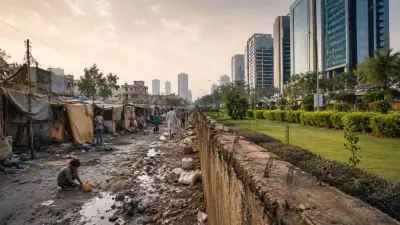
Pakistan's governments plan short-term, only for their own tenures and not for the country's future. Their interest spans move from fiscal year to fiscal year, unless they have just taken charge; in which case, a comparison with all previous governments' years-old tenures and how the current disposition has managed to improve numbers is a must. Every budget is a pledge, every amendment reformative, every policy a promise, every step an implementation, yet the results are never visible—neither in numbers defining the country nor in statistics that the people enact and live through every day. Improved numbers, if any, do not show on the faces of the masses or in the urban or rural ramifications.
The Common Man's Unfulfilled Needs
Why does the common man never feel satiated? Why does justice never feel served? Poverty never feel defeated? Education never feel elevated? Health never feel improved? Population control never feel accomplished? Infant mortality never feel diminished? Unemployment never feel curtailed? Gender parity never feel achieved? Despite lofty claims of the keepers of the public exchequer, we remain among the poorest, with among the lowest child expectancy, lowest human development index, lowest literacy rate, lowest health spending, and lowest tax-to-GDP ratio. Meanwhile, with every passing June and its economic surveys and budgets, the window of opportunity to execute and reform does not open but closes a little more.
The Budget for FY27: Lauded and Rebuked
The budget for FY27 is being lauded as a better budget than Pakistan has witnessed in many years, promising to herald a transition from the age-old stabilisation slur and geared towards guarded growth—a budget that can transition stability into growth, a goal frequently deferred to the distant future. The budget is also being rebuked for being 'a document trying to be a relief budget, a growth budget and a consolidation budget' at the same time, without being good at any of the stated goals.

Taxation: Relief for Some, Evasion for Others
There is relief for salaried classes and documented taxpayers who have always borne the unwarranted burden of taxation in Pakistan. This seems significant considering how little previous budgets had to offer in this regard, while focused more on macro-crisis management. However, tax reform is still missing as tax evasion by the elite and moneyed segments is a normalised practice with zero accountability. Efforts to bring them into the tax net are few and far between. Whenever there is a move to document the undocumented, it is more of a compromise and concession than an attempt at setting things right, as appeasement and the impression of inclusion go side by side. One may say this is a tax regime that rewards evasion over compliance.
An apt example is the Fixed Tax Asaan Scheme introduced in the budget for traders, a powerful constituency in the PML-N-led Punjab. The scheme seems to be more of a compromise that creates a parallel track for traders to stay out of the documented economy by paying a meagre amount as taxes. The retail sector has always contributed almost nothing to direct taxes. With no audits and point-of-sale requirements, how traders will become a part of the documented economy—especially with the government promoting a cashless economy initiative and expanding POS systems to discourage cash transactions and encourage digital payments—is anyone's guess. The Asaan Tax scheme defies the very requirement the POS initiative is designed to fulfil by providing a free hand to non-compliant segments.
Provincial Surpluses and Elite Capture
As expected, the federal government has not cut its expenditure and spending, but it expects the provinces to carry the weight of its extravagance and run surpluses to the tune of Rs 1.8 trillion without a renegotiated NFC framework—a move that has typified most previous budgets for the past decade. The extraction of Rs 1 trillion from the provinces' share of the divisible pool and making this arrangement permanent till FY29 can hardly fall under the ambit of reforms.
Consequences of Omissions and Submissions
The consequences of all these omissions and submissions are visible as Pakistan spends almost nothing on education and health as a share of its national income. Public health expenditure is 0.8% of GDP, while education spending is also 0.8% of GDP. Together, the two sectors most essential to human capital development and national growth receive only 1.6%, the smallest slice of the GDP pie. Pakistan has all the vibes of a land for the elite, of the elite, by the elite. For the privileged and the well-connected, there is no budgeting—neither of their finances nor their lifestyles. Budget after budget, they continue to secure lavish subsidies, freebies, salary hikes, tax evasions, and more, while elite capture and reckless expenditures are never audited or budgeted by any number of economic surveys or budgets. Such self-deception cannot continue if we really want to write a better story for Pakistan.