NEPRA's Regulatory Shift Threatens Pakistan's Solar Revolution and Economic Future
When institutions tasked with public protection betray that trust, the consequences are profound and far-reaching. Pakistan currently faces such a pivotal moment, centered on a decision by the National Electric Power Regulatory Authority (NEPRA) that could reshape the nation's energy landscape and international standing. While external threats often dominate security discussions, internal corrosion—particularly in economic foundations—poses a more insidious danger to national stability.
The Rise of Circular Debt and NEPRA's Role
Established in 1997, NEPRA was designed to safeguard consumers and ensure integrity in the power sector, a time when circular debt was not yet a term in Pakistan's lexicon. Today, this debt has ballooned into a fiscal crisis exceeding Rs 1,700 billion by December 2025, driven by unpaid subsidies, inefficient thermal plants, and distribution losses. Prime Ministerial admissions have highlighted how this crisis reduced Pakistan to a "global beggar's bowl," underscoring national humiliation rather than mere political rhetoric.
Efforts to address the issue, such as forming a high-level committee to renegotiate Independent Power Producer (IPP) agreements, have faltered, with many responsible for the crisis involved in its resolution. This has led to repetitive failures rather than genuine reform. NEPRA's endorsement of costly LNG and coal projects, including tariffs that now exceed Rs 200 per unit for some plants, has positioned it as an ally to IPPs rather than a consumer guardian, undermining affordable electricity essential for industry, agriculture, and exports.

The Solar Surge and Regulatory Backlash
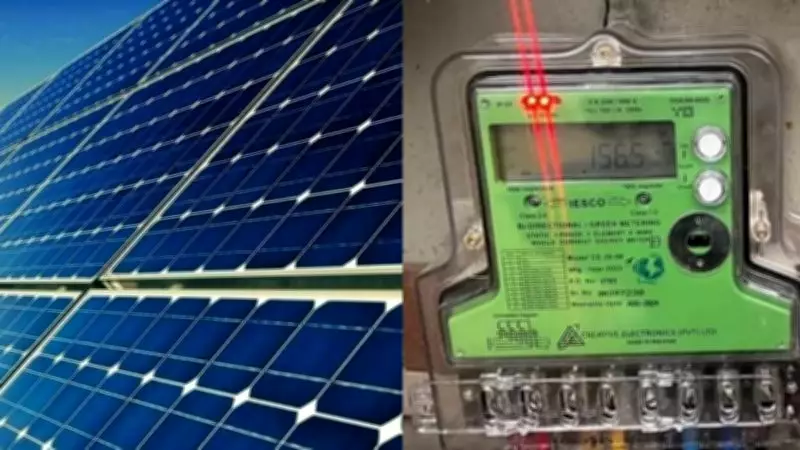
In response to soaring electricity tariffs, which increased by 155% over three years, Pakistanis turned to rooftop solar power in a grassroots movement. Solar imports tripled as families invested in clean, affordable energy, reducing grid dependence and greenhouse gas emissions. This shift represented hope and practical action against climate change, aligning with Pakistan's UN pledge to cut projected emissions by 50% by 2030.
However, NEPRA's recent notification converting net metering to net billing threatens this progress. Under new regulations, rooftop solar users face five-year contracts, with exported electricity bought at Rs 11 per unit—down from Rs 26—while imported power from DISCOs is billed at Rs 37–55 per unit, excluding taxes. This imbalance penalizes solar adoption, discouraging clean energy at a critical juncture and contradicting international climate commitments.
Global Comparisons and Domestic Consequences
Contrasting with Pakistan's retreat, regulators in countries like India are advancing with AI integration to enhance grid efficiency and renewable integration. This disparity highlights missed opportunities for Pakistan, where fair tariffs and sustainable choices could have spurred development in regions like Balochistan and Khyber Pakhtunkhwa, using savings from avoided circular debt to bolster economic and national security.
The decision risks isolating Pakistan globally, where climate credibility is increasingly valued, and domestically, it erodes trust in institutions meant to protect the public. When citizens' investments in clean energy meet regulatory resistance, and international pledges are undermined by domestic actions, confidence in governance collapses. This institutional decay, where regulators prioritize narrow interests over public welfare, fractures the social contract and weakens economic foundations critical for national strength.
History will judge this moment, questioning why a regulator cast shadows on citizens reaching for solar solutions. The true threat to Pakistan may not lie beyond its borders but in the internal weakening of pillars meant to sustain growth and integrity.