Pakistan Halts Gas Sector Circular Debt Growth, Announces Major Energy Reforms
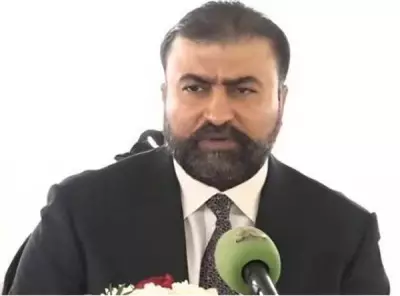
Federal Minister for Petroleum Ali Pervaiz Malik has declared that the escalating gas sector circular debt has been successfully halted without any budgetary support. In a significant development, he revealed that the principal amount of this debt was reduced by Rs15 billion during the first quarter (July-September) of the fiscal year 2025-26.
Strategic Energy Sector Reforms Unveiled
Addressing the Pakistan Governance Forum organized by the Ministry of Planning, Development and Special Initiatives, Minister Malik emphasized the critical importance of an efficient, functional, and sustainable energy sector. He highlighted the government's comprehensive reform agenda and strategic direction, underscoring key initiatives undertaken by the Petroleum Division under Prime Minister Shehbaz Sharif's leadership.
Recent steps include:

- Revival of the Cabinet Committee on Energy, chaired by the Prime Minister.
- A holistic planning exercise conducted with international consultants Wood Mackenzie, integrating all energy supplies and sources with the Power Division's IGCEP framework.
- Efforts to make the Integrated Energy Secretariat functional and permanent for better coordination and long-term planning.
Governance Improvements and Debt Reduction
Minister Malik shared that the gas sector circular debt's principal amount, which had risen to approximately Rs1,831 billion by June 2025, declined to Rs1,816 billion by September 2025. He clarified that reported increases in circular debt figures primarily reflect accumulated interest and LPS (Late Payment Surcharges). A comprehensive liquidation plan is being developed and will be presented to the Prime Minister.
Further governance enhancements include:
- Commissioning an independent UFG (Unaccounted-for Gas) study to tighten UFG allowance criteria through OGRA (Oil and Gas Regulatory Authority).
- Updating petroleum policies and announcing a new Tight Gas Policy to bolster energy security.
- Initiating a shale pilot project in Hyderabad and restructuring the DGPC office under World Bank guidance.
Foreign Investor Interest and Economic Vision
The minister noted growing foreign investor interest in Pakistan's energy sector, with Turkish Petroleum opening an office in Islamabad, a recent delegation visit from SOCAR, and an expected visit from Kuwait Foreign Petroleum Exploration Company (KUFPEC) in the coming months. He reaffirmed the government's commitment to greater deregulation in the gas sector to unleash market forces, improve operational efficiency, and encourage private sector investment.
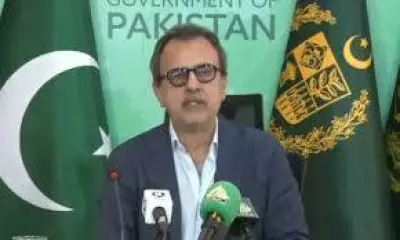
Earlier at the forum, Federal Minister for Planning Ahsan Iqbal outlined an ambitious economic vision, stating that Pakistan could become a $1 trillion economy by 2035 through national cohesion, synergy, and reforms, or settle for $600 billion with traditional growth. He highlighted that good governance based on merit, transparency, and accountability has steered the economy away from bankruptcy, with international financial institutions now presenting Pakistan's recovery as a case study.
Key priorities under the government's Five Es framework include:
- Increasing exports beyond $100 billion.
- Promoting technology and artificial intelligence.
- Addressing climate change and improving energy efficiency.
- Investing in human resource development.
Minister Iqbal warned of serious governance challenges, such as climate change, water security, a 2.55% annual population growth rate, 40% child stunting, 25 million out-of-school children, and a 10% tax-to-GDP ratio. He emphasized the need to address a performance gap where 9 million overseas Pakistanis contribute $40 billion in remittances, while a domestic population of 240 million generates only $40 billion in exports.
Concluding his remarks, Minister Malik acknowledged that much work remains but stressed that critical first steps have been taken to stabilize and reform Pakistan's energy sector, paving the way for sustainable growth and increased investment.