Pakistan's Silent Economic Drain: The Cost of Excluding Women
No nation can achieve economic prosperity while leaving half its population vulnerable and excluded. For Pakistan, the persistent challenge of ensuring women's safety and dignity translates directly into staggering economic losses, diminished productivity, and weakened global competitiveness.
Legal Framework: Progress and Limitations
Pakistan took its first major step toward workplace safety with The Protection against Harassment of Women at the Workplace Act, 2010. This landmark legislation required organizations to establish codes of conduct and inquiry committees, though it narrowly defined harassment as primarily sexual misconduct within formal workplaces.
The 2022 Amendment expanded coverage to include freelancers, domestic workers, virtual spaces, and gender discrimination. However, both laws share a critical structural limitation: they presume formal employment structures with internal committees and HR mechanisms.

For the vast majority of Pakistani women working in informal, home-based, or field positions, these legal protections remain theoretical. The law exists on paper, but fails to reach where most women work.
Alarming Statistics and Real-World Consequences
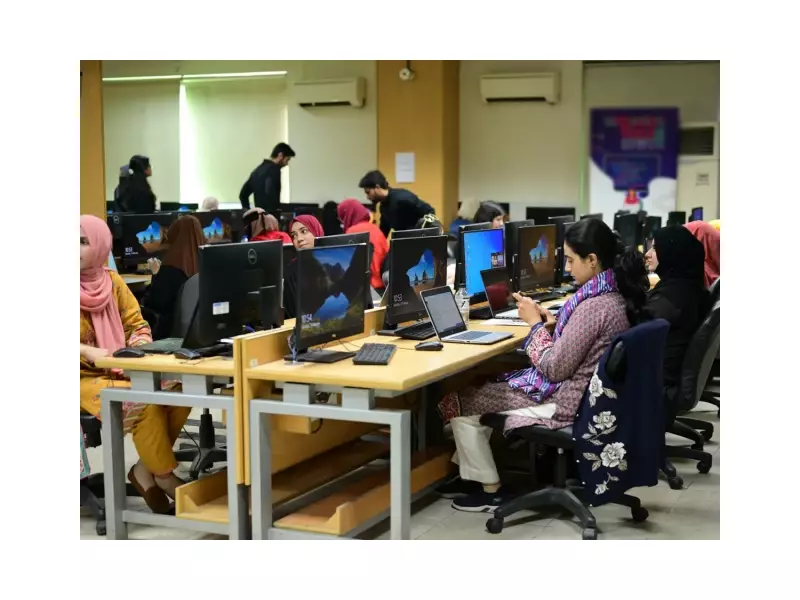
Pakistan faces a severe gender participation crisis with female labour force participation hovering around 21-22%, ranking among the lowest in South Asia. Safety concerns, mobility restrictions, and social constraints prevent most women from joining or remaining in the workforce.
The legal definition of harassment remains dangerously narrow. In the significant Nadia Naz v President of Pakistan (2021 SCMR 1004) case, the Supreme Court interpreted the law strictly, addressing only sexual harassment while ignoring broader forms of gender-based hostility and exclusion.
This approach reduces a structural social problem to isolated incidents and masks the economic consequences of women exiting workplaces due to fear or marginalization.
Systemic Failures in Protection Mechanisms
The current legal framework operates on a complaint-driven system that assumes women can safely report incidents, have access to reporting mechanisms, and possess the courage to come forward. Reality paints a different picture where stigma, retaliation fears, and job insecurity deter most victims.
Over 1,300 workplace harassment complaints filed in the past ten months indicate growing awareness but not necessarily prevention. True success should be measured by deterrence—creating economic spaces where women feel secure enough to participate and thrive.
Pakistan's real challenges extend far beyond office walls into homes, classrooms, markets, and digital platforms. Domestic workers harassed in private residences, commuters abused on public transport, and freelancers targeted online all face fragmented or nonexistent redress systems.
Media's Role in Eroding Societal Values
Sensationalist media content further corrodes societal respect for women. Television dramas and viral social media posts normalize vulgarity, trivialize trauma, and promote distorted narratives that erode collective moral standards.
Young girls working or playing in streets, shops, and educational institutions remain largely invisible, unprotected, and exposed to various forms of exploitation.
Institutional Weaknesses and Economic Consequences
The Ministry of Human Rights and National Commission on the Status of Women, while mandated to protect women's rights, remain predominantly reactive institutions. They focus on monitoring and reporting rather than designing proactive policies that integrate women as economic actors.
Treating harassment purely as a legal offense misses its critical economic dimension. Every woman who leaves the workforce due to fear represents lost skills, productivity, and income. The World Bank estimates that closing Pakistan's gender gap could boost GDP by billions annually.
Pakistan's ranking of 148 out of 148 countries in the World Economic Forum Gender Gap Report 2024 should have triggered national emergency measures. A society that sidelines half its workforce defies both Islamic principles and constitutional mandates.

Five-Point Plan for Economic Transformation
Legal and Economic Reorientation: Pakistan requires an expanded Gender-Based Harassment and Violence Law covering all work contexts—formal, informal, and digital. Harassment definitions must include gender-hostile, exclusionary, or intimidating conduct.
Institutional Integration: Protection systems need linking with labour departments, ICT regulators, and social protection agencies. Establishing one-window Gender Justice Desks at provincial and district levels can provide streamlined access for women.
Cultural and Preventive Reform: The national discourse must shift from protection at work to dignity everywhere. This requires reforming media codes, training employers and informal-sector associations, and embedding prevention into performance metrics.
Economic Empowerment: Simplifying access to finance, banking services, and entrepreneurship programs for women is crucial. Providing information, advisory services, and targeted support will help integrate women into economic value chains.
Gender-Responsive Budgeting: Fiscal resources must reflect the scale of the challenge and prioritize women's economic inclusion through dedicated budget allocations.
From Legal Compliance to Cultural Transformation
Pakistan's Protection against Harassment Act demonstrated vision in 2010. By 2025, it must evolve into a comprehensive Dignity and Equality Law that recognizes women as citizens whose safety fuels economic growth, not merely as victims requiring rescue.
Women's safety transcends being a social issue—it represents fundamental economic policy. The transition Pakistan urgently needs moves from legalism to justice, from adjudication to prevention, and from compliance to culture-building.
When dignity becomes integrated into the economy, progress ceases to be selective and transforms into truly inclusive growth that benefits the entire nation.