Economic Leadership Remains Tight-Lipped on UAE's Brief Debt Extension
Pakistan's highest economic authorities maintained a conspicuous silence on Wednesday regarding the underlying reasons for a surprisingly short one-month extension granted by the United Arab Emirates for the repayment of a substantial $2 billion debt. However, they emphatically reassured that the entirety of Pakistan's $12 billion worth of bilateral financial commitments from key allies remains firmly in place and operational.
Deflecting Questions to Foreign Affairs
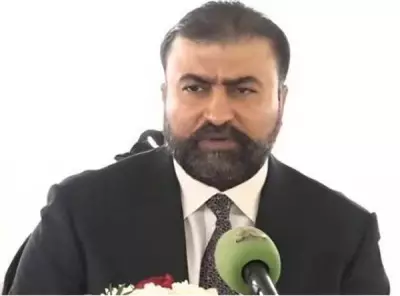
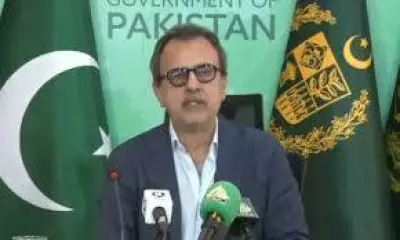
During and following a session of the Senate Standing Committee on Finance, key figures including Finance Minister Muhammad Aurangzeb, Finance Secretary Imdadullah Bosal, and State Bank of Pakistan Governor Jameel Ahmad skillfully sidestepped direct inquiries concerning the rationale behind the mere one-month rollover. The Ministry of Finance explicitly redirected questions about potential political motivations for this brief extension to the Ministry of Foreign Affairs, highlighting the sensitive geopolitical dimensions possibly at play.
"At the time of the Extended Fund Facility programme, we had to give the entire picture and all bilateral arrangements are part of that," stated Finance Minister Aurangzeb in his post-meeting remarks. He was referencing the crucial assurances provided to the International Monetary Fund by China, Saudi Arabia, and the UAE, pledging to maintain their combined $12 billion in cash deposits with the State Bank throughout the three-year programme period.

Commitments Intact Amidst Speculation
The finance minister further clarified that should any alterations occur to this $12 billion assurance framework, the government would promptly inform the media and public. When pressed on whether regional geopolitics influenced the UAE's decision for only a one-month extension, Minister Aurangzeb reiterated, "all the bilateral commitments were in place." This statement aimed to quell concerns about the stability of Pakistan's external financial support network.
During the committee proceedings, Senator Abdul Qadir directly questioned whether the UAE expressed any dissatisfaction. Finance Secretary Bosal responded that only the Ministry of Foreign Affairs was equipped to address such diplomatic nuances. The secretary offered no commentary on the reasons for the short extension or whether Pakistan would pursue a longer-term arrangement with the UAE in the near future.
Details of the Debt Rollover
According to prior reports, the UAE agreed to roll over the $2 billion debt for one month at the existing interest rate of 6.5%. This involved two separate loans of $1 billion each, which had reached maturity in mid-January. Informed sources indicated that this one-month window was intended to allow additional time for negotiations concerning the loan's final tenure and interest rate structure.
Pakistan's official position seeks a significantly more favorable two-year rollover period coupled with a reduced interest rate of approximately 3%. Government officials emphasized that securing another rollover is critical, as repaying the debt outright would create an immediate financing gap requiring alternative sources to fill.
Broader Financial Context and History
Under the current $7 billion IMF programme, the UAE, alongside Saudi Arabia and China, has committed to maintaining a total of $12.5 billion in cash deposits with the State Bank of Pakistan at least until the programme concludes in September of the coming year. The breakdown of these deposits includes $3 billion from the UAE, $5 billion from Saudi Arabia, and $4 billion from China.
The history of this debt traces back to 2018 when the UAE initially provided $2 billion to Pakistan on a one-year term. Pakistan's inability to repay led to annual rollover requests. In 2023, the UAE extended an additional $1 billion loan to assist Pakistan in meeting external financing prerequisites for the IMF bailout package. This $2 billion obligation constitutes a notable portion of Pakistan's total foreign exchange reserves, which stand at $16 billion.

Pakistan currently incurs an annual interest payment of roughly $130 million on the UAE debt at the prevailing rates. The interest rate has seen a significant increase, rising from 3% in 2018 to 6.5% last year. Pakistan has formally requested a reduction back to around 3%, citing improvements in its credit rating and lower global interest rate trends.
Political and Diplomatic Undertones
Prime Minister Shehbaz Sharif recently expressed the emotional and diplomatic weight of seeking international financial assistance, stating, "Our self-respect suffers greatly when we take on debt." He noted that creditor nations sometimes request concessions in return, creating complex diplomatic scenarios where Pakistan's negotiating position can be constrained.
In December, the SBP Governor formally requested the UAE government for a two-year rollover of $2.5 billion in debt and an interest rate cut by nearly half. This was followed by a direct appeal from Prime Minister Sharif to the UAE President, who indicated agreement in principle but provided no specific details on terms.
Other Economic Developments
On related fronts, Finance Minister Aurangzeb confirmed that Pakistan-IMF discussions for the third review of the $7 billion package are scheduled for late February. A successful conclusion would enable the disbursement of a $1 billion fourth tranche and approximately $220 million under a climate resilience facility.
Additionally, the launch of Pakistan's Panda Bond initiative, valued at $250 million, has been postponed to the first quarter of the current fiscal year due to holiday schedules in China. The government has been attempting to launch these bonds since December 2024.
Minister Aurangzeb also mentioned that the second meeting of the National Finance Commission will convene only after all relevant sub-group meetings have occurred, with several such meetings planned for the upcoming week.