Pakistan Prepares for Pivotal IMF Review to Secure $1.2 Billion in Funding
Pakistan is poised for a crucial International Monetary Fund (IMF) review this week, with expectations high for the release of approximately $1.2 billion in funding. Officials have expressed confidence that the country is well-prepared and on track to meet its program goals, setting the stage for significant economic discussions.
Finance Minister Confirms Readiness and Meeting Schedule
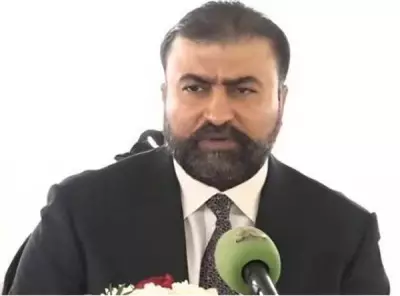
In a recent television interview, Federal Minister for Finance and Revenue Muhammad Aurangzeb outlined the upcoming review process. He revealed that the IMF team, led by Iva Petrova, has already initiated its mission in Karachi, engaging in talks with the State Bank of Pakistan. Aurangzeb is scheduled to meet the delegation in Islamabad on Monday to further discussions.
"We are getting ready for the third review," Aurangzeb stated. "It will cover both performance benchmarks and structural benchmarks, as well as a forward-looking assessment of the program." He emphasized that Pakistan anticipates a "meaningful conversation" with the IMF, noting that while it is premature to predict outcomes before formal talks conclude, the country is in a strong position for the review.

Review Details and Economic Implications
The IMF mission, which arrived in Pakistan on Wednesday, will remain until March 11 to complete two key reviews. According to official reports from both the IMF and Pakistan's Ministry of Finance, the staff mission will conduct:
- The third review under the Extended Fund Facility (EFF)
- The second review under the Resilience and Sustainability Facility (RSF)
Successful completion of these reviews is projected to unlock around $1.2 billion in funding by late April, comprising $1 billion from the EFF and $200 million from the RSF. This infusion is seen as vital for bolstering Pakistan's economic stability and growth prospects.
Economic Progress and Key Challenges Under Scrutiny
The IMF has acknowledged Pakistan's policy efforts, stating they have "helped stabilize the economy and rebuild confidence." Key economic indicators support this assessment:
- A primary fiscal surplus of 1.3% of GDP for FY25, aligning with program targets
- Inflation projected to stay within the 5-7% target range for FY26 and FY27
- Foreign exchange reserves reaching $14.5 billion at the end of FY25, with a target of $18 billion by June this year
However, the IMF mission will also examine pressing challenges, including:
- Management of "circular debt" in the energy sector
- Recent adjustments to electricity tariffs
- Implementation of the Governance and Corruption Diagnostic report
- Progress on the National Fiscal Pact
Additionally, discussions will encompass the framework for the FY2026-27 federal budget, as confirmed by the Ministry of Finance. These agenda items highlight the comprehensive nature of the review, focusing on both immediate fiscal measures and long-term structural reforms.
As Pakistan navigates this critical juncture, the outcome of the IMF review will play a pivotal role in shaping the country's economic trajectory, with implications for investment, inflation control, and overall financial health in the coming months.