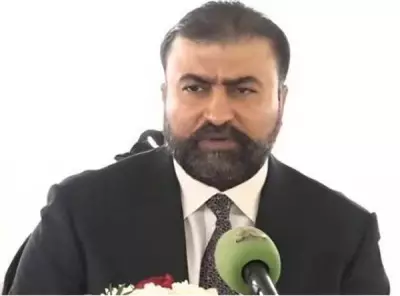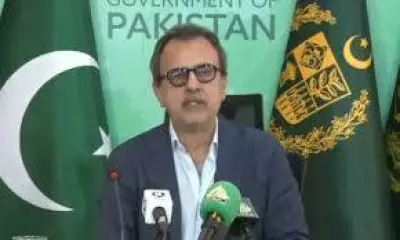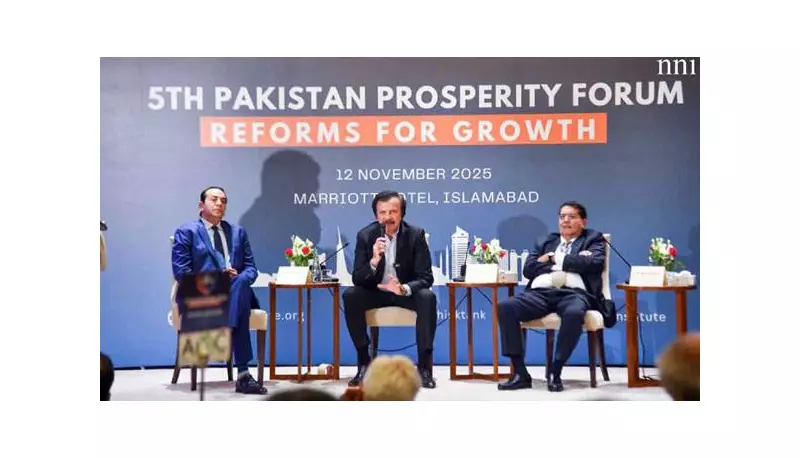
In a significant development for Pakistan's economic landscape, Special Assistant to the Prime Minister on Industries and Production Haroon Akhtar Khan has reaffirmed the government's commitment to comprehensive economic reforms and industrial revival. The announcement came during his keynote address at the Pakistan Prosperity Forum 2025 hosted by the Policy Research Institute of Market Economy (PRIME) in Islamabad.
Three-Pillar Reform Strategy
Khan outlined the government's ambitious reform agenda across three major areas during the forum titled "Charting a New Path Toward Limited Government and Lower Taxes." He emphasized that Pakistan stands at a critical inflection point in its economic journey, where the government is determined to replace short-term fixes with long-term, systemic reforms.
"Economic stability is not achieved by chance; it is built through consistency, credibility, and competence," Khan stated, echoing Prime Minister Mian Muhammad Shehbaz Sharif's vision.

Tariff Rationalization and Industrial Diversification
Under the New National Tariff Policy, Pakistan is transitioning from protectionism to competitiveness. The government has simplified the tariff structure into just four slabs—0%, 5%, 10%, and 15%—while phasing out all Additional and Regulatory Duties.
This policy alone will generate Rs175 billion in annual cost savings for industries, making tariffs an engine of export-led growth rather than a barrier to trade. The policy specifically encourages value addition and technology-intensive sectors including artificial intelligence, electric vehicles, chemicals, and green technologies.
Regulatory Reform and Industrial Revival
The government's Regulatory Guillotine and Reform Initiative, implemented through the Board of Investment, has already delivered 465 regulatory simplifications under three reform packages. These measures are saving businesses more than Rs 250 billion annually in compliance costs.
The centerpiece of the economic transformation is the National Industrial Policy 2025, described as "a blueprint for national revival." Formulated after extensive consultations with stakeholders from the State Bank of Pakistan, SECP, FBR, and major chambers of commerce, the policy aims to restore investor confidence and revive manufacturing capacity.
A key component is the Revival and Debt Resolution Framework for Sick Industrial Units, developed in partnership with SECP, State Bank, and Pakistan Banking Association. This framework will enable restructuring of non-performing industrial assets through the newly established National Industrial Revival Commission (NIRC).
Energy and Tax Reforms
The government is implementing significant energy and tax reforms, including preferential electricity tariffs for high-tech greenfield industries such as EVs, batteries, and data centers. Plans are also underway to phase out the super tax and move toward a balanced, growth-oriented tax regime.
"We are shifting the paradigm from protectionism to productivity, from ad-hoc incentives to performance-based rewards, and from import dependence to value addition," Khan asserted, emphasizing that the government is rebuilding the spirit of enterprise that once made Pakistan a rising industrial power in South Asia.
Investment Climate and Private Sector Participation
Qaiser Ahmed Sheikh, Federal Minister for Investment, highlighted ongoing efforts to improve the investment climate through deregulation and the establishment of a Business Facilitation Centre. He noted that despite economic stabilization, foreign direct investment remains below potential due to energy shortages and IMF conditionalities.
The forum also featured insights from international experts including Peter Goettler, President and CEO of the Cato Institute, who emphasized that "freedom ultimately leads to prosperity" and highlighted Pakistan's vast potential in human capital.
Rizwan Rawji, a supply-side economist, warned that excessive taxation cannot create prosperity, noting that many economies, including Pakistan, are already in the prohibitive range where higher taxes lead to lower revenues according to the Laffer Curve.

The Pakistan Prosperity Forum 2025 concluded on an optimistic note, reaffirming PRIME's mission to advance evidence-based reforms, open markets, and individual liberty, paving the way for a freer, more prosperous Pakistan.