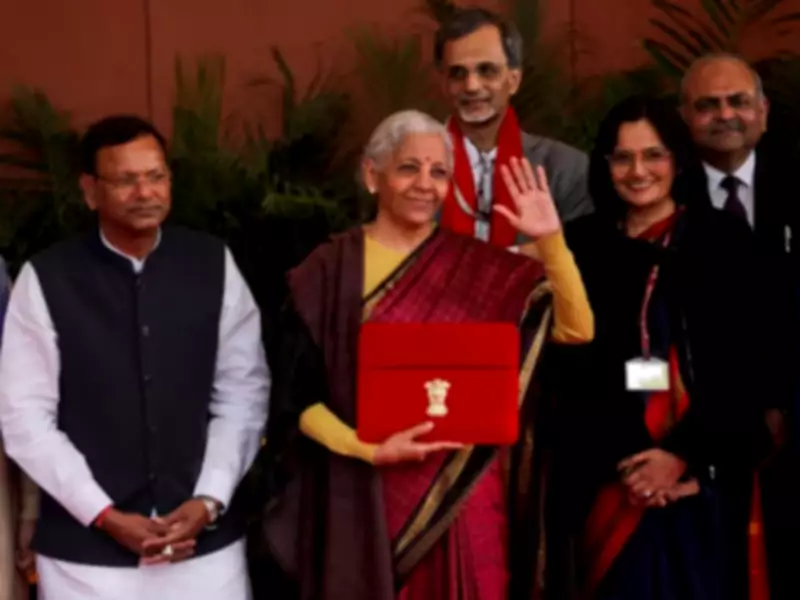
In a landmark national budget speech on Sunday, Finance Minister Nirmala Sitharaman unveiled India's plans for unprecedented spending on infrastructure and defense, marking a significant shift in the country's economic and strategic priorities. The announcement comes amid global trade tensions and regional security concerns, positioning India for accelerated growth and enhanced self-reliance.
Record-Breaking Allocations for Infrastructure and Defense
New Delhi has allocated a staggering $133 billion for infrastructure development and $85 billion for defense expenditures in the upcoming fiscal year. This represents a substantial increase of approximately 9% in infrastructure funding and 15% in defense spending compared to the previous year's budget. Finance Minister Sitharaman emphasized that public investment in infrastructure has skyrocketed from around $21 billion in 2014-15, reaching what she described as an "all-time high."
Strategic Defense Investments Post-Conflict
The significant hike in defense spending follows a tense four-day conflict with arch-rival Pakistan in May of last year, which resulted in at least 70 casualties and featured extensive use of drones, missiles, and artillery. Defense Minister Rajnath Singh hailed the budget as "unprecedented," stating it will equip India's armed forces with advanced fighter jets, drones, ships, submarines, and other critical hardware. "It is in the best interest of the nation," he affirmed, highlighting ongoing negotiations with domestic and international suppliers from countries like France, the United States, and Germany.

Infrastructure as a Catalyst for Economic Growth
Prime Minister Narendra Modi underscored that India is not merely content with being the fastest-growing economy but aims to become the world's third-largest. The budget outlines an ambitious roadmap to revitalize domestic manufacturing and create millions of new jobs. Key sectors targeted for export growth include textiles, pharmaceuticals, electronics, and chemicals, with plans for developing business parks and a $5 billion investment to boost domestic electronics manufacturing.
High-Speed Rail and Rare Earth Initiatives
The budget introduces plans for seven high-speed rail corridors connecting major cities such as Mumbai, Bengaluru, Hyderabad, Pune, and Chennai. Additionally, a scheme to establish "rare earth corridors" in four mineral-rich states in southern and eastern India aims to enhance mining and processing capabilities, supported by government incentives.
Embracing Technology and Global Challenges
In response to a challenging external environment where trade and multilateralism are under threat, Sitharaman announced support for data centers, artificial intelligence, and the semiconductor industry. She proposed a tax holiday until 2047 for foreign companies providing cloud services globally using Indian data centers, following significant investments from tech giants like Amazon, Google, and Microsoft. "India will continue to take confident steps towards 'Vikasit Bharat' (developed India) by balancing ambition with inclusion," she stated, addressing issues such as US tariffs and India's trade deals with the European Union.
This budget reflects India's strategic pivot towards bolstering its infrastructure and defense capabilities while navigating complex international relations and fostering technological innovation to secure its economic future.