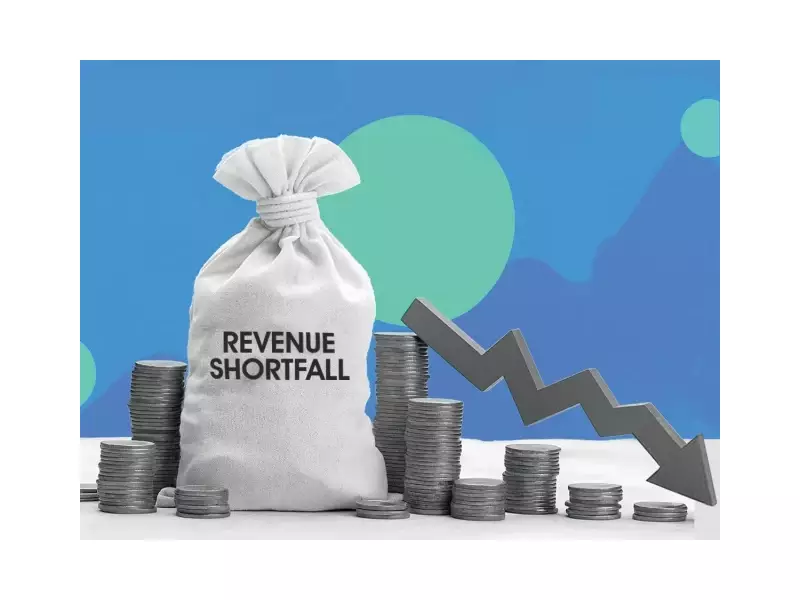
The International Monetary Fund (IMF) has sounded the alarm over a widening tax shortfall and serious governance lapses within the Federal Board of Revenue's (FBR) data automation arm, Pakistan Revenue Automation Limited (PRAL). This concern emerges as Pakistan's tax collection deficit balloons to a staggering Rs428 billion in just the first five months (July to November) of the fiscal year.
IMF's Stern Warning on PRAL Governance
In a recently released Governance and Corruption Diagnostic Assessment, the IMF confirmed earlier reports by The Express Tribune, highlighting critical failures at PRAL. The global lender pointed out that PRAL has begun recruiting new management and outsourcing its core functions without first establishing a legally mandated code of conduct and a conflict of interest policy.
"Although legally required, a code of conduct and conflict of interest policy have not been developed," the IMF report stated. It expressed particular concern that this hiring spree, which offers competitive salaries, is happening alongside the outsourcing of vital operations, all without the necessary ethical safeguards in place.

The situation has caused significant unease within the government. A meeting was held in the Prime Minister's Office last Friday, where officials struggled to formulate a defense for these actions to be presented in parliament and to the media. There was a proposal for Minister of State for Finance, Bilal Azhar Kayani, to address the issue on the government's behalf.
Deep-Rooted Issues in Data Management and Security
The IMF's assessment paints a picture of an organization in disarray. PRAL, which is entrusted with the FBR's sensitive data management, is reportedly being run on an ad hoc basis. The report found that PRAL lacks a systematic overview of data management and security risks and does not maintain a risk register. Alarmingly, transaction logs are only reviewed after an incident has been reported, rather than being used proactively to identify and prevent potential breaches.
The IMF emphasized that effective oversight of PRAL by the FBR is crucial. While basic mechanisms like weekly meetings and service-level agreements exist, the FBR must have continuous assurance that PRAL operates within its mandated framework and complies with all requirements. The government has also failed to appoint a permanent Chief Executive Officer for PRAL, and the additional charge for Dr. Hamid Ateeq Sarwar as a member of Inland Revenue Operations expired in mid-November without extension.
Mounting Tax Collection Crisis
The governance concerns are compounded by a severe and growing tax collection crisis. Official statistics reveal the gravity of the situation:
- The five-month collection stood at Rs4.715 trillion against a target of Rs5.14 trillion.
- Income tax collection missed its target by Rs177 billion, with only Rs2.19 trillion collected.
- Sales tax performance was even worse, falling short by Rs250 billion (Collection: Rs1.67 trillion).
- In November alone, the FBR collected only Rs878 billion against a target of Rs1.035 trillion, a shortfall of Rs157 billion.
This massive gap persists despite the government imposing new taxes, increasing rates, and taking enforcement measures in the budget. The FBR has even requested the State Bank to keep commercial banks open on a Saturday in a last-ditch effort to collect around Rs15 billion in maturing advances. A senior tax official expressed hope that this move could reduce the monthly shortfall to Rs135 billion.
The heavy tax burden is crippling businesses, a fact acknowledged by Sarfraz Ahmad, the national coordinator of the Special Investment Facilitation Council, who has laid out a plan to lower these taxes.