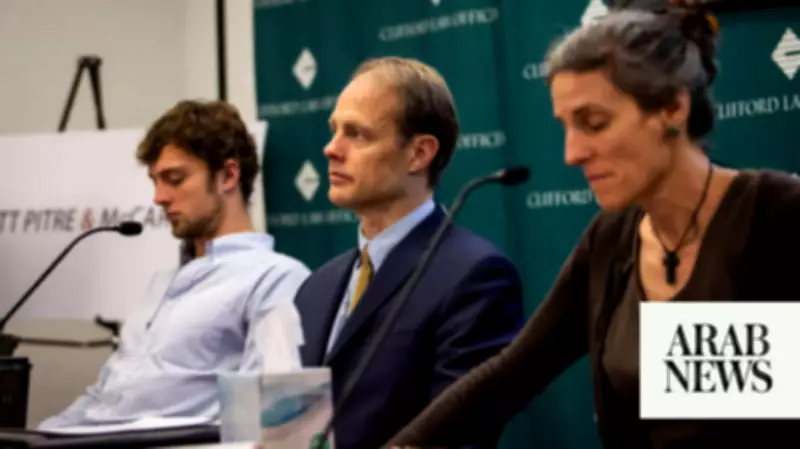
A federal jury in Chicago has awarded $49.5 million to the family of a 24-year-old global nonprofit worker who died in the 2019 crash of a Boeing 737 Max jet in Ethiopia. The verdict, reached on Wednesday after a trial in U.S. District Court, resolves one of the last remaining wrongful death lawsuits connected to the disaster that killed all 157 people aboard Ethiopian Airlines Flight 302.
Victim's background and award breakdown
Samya Stumo, from Sheffield, Massachusetts, had recently joined a nonprofit focused on strengthening health systems in developing countries. A 2015 graduate of the University of Massachusetts Amherst, she was traveling to Uganda for her first major project when the plane crashed minutes after takeoff from Addis Ababa on March 10, 2019.
Jurors awarded $21 million for pain and suffering and emotional distress Stumo experienced on the flight, $16.5 million for loss of companionship suffered by her family, and $12 million for their grief, according to attorneys representing her estate.

Legal context and Boeing's liability
This is the second verdict tied to the crash. Boeing has reached confidential pre-trial settlements in most of the dozens of wrongful death lawsuits filed in connection with the Ethiopian Airlines disaster and a similar 737 Max crash five months earlier off Indonesia, which together killed 346 people.
The fatal crashes became a defining crisis for Boeing and the 737 Max program. Investigators found that a flight-control system repeatedly forced the noses of the planes downward based on faulty readings from a single sensor, and pilots in both crashes were unable to regain control.
The verdict follows a November 2025 jury award of $28.45 million to the family of Shikha Garg, a United Nations environmental consultant who also died in the 2019 crash. That case was the first civil jury trial from the disaster, with jurors tasked only with calculating damages because Boeing had accepted liability.
Boeing's response and ongoing scrutiny
“We are deeply sorry to all who lost loved ones on Lion Air Flight 610 and Ethiopian Airlines Flight 302. While we have resolved nearly all of these claims through settlements, families are entitled to pursue their claims through the court process, and we respect their right to do so,” a Boeing spokesperson said Thursday.
The Ethiopian Airlines crash prompted a worldwide grounding of the 737 Max that lasted over a year and triggered multiple investigations into Boeing’s safety culture and regulatory oversight. Federal prosecutors later charged Boeing with misleading regulators about the Max’s flight-control system. In November, a federal judge in Texas approved a Justice Department request to dismiss the criminal case after prosecutors reached an agreement requiring Boeing to invest an additional $1 billion in fines, family compensation, and safety improvements.
Stumo’s family has been among the most outspoken relatives seeking accountability from Boeing and changes to federal aviation oversight. Her father, Michael Stumo, has publicly pressed Boeing, regulators, and Congress over what families viewed as failures that allowed the 737 Max to keep flying after the first crash off Indonesia.